Laying tile on tile, applying plaster on smooth concrete, spreading adhesive on putty — these jobs don’t hold with standard primers. The substrate is too smooth: no porosity, no mechanical grip, the adhesive can’t bond. The bonding bridge eliminates this obstacle.
A bonding bridge is primarily needed when the substrate surface is non-absorbent or smooth:
On these substrates, the bonding bridge creates micro-roughness, allowing the adhesive, plaster, or leveling compound to bond. Without a bonding bridge, the entire tile or plaster system fails at the substrate-coating interface.
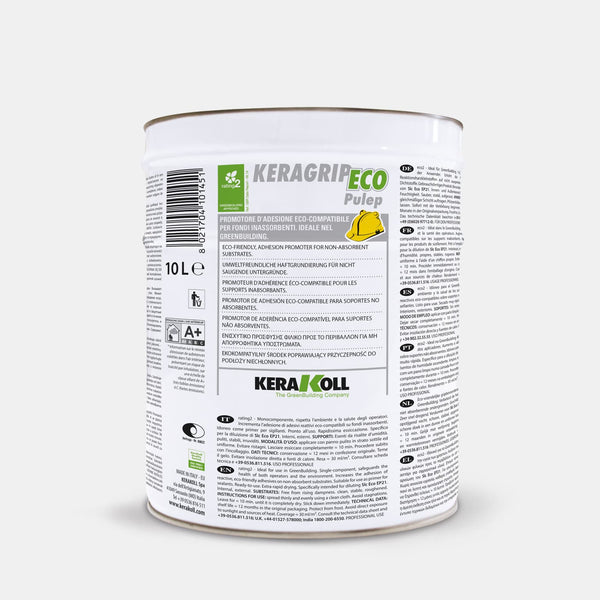
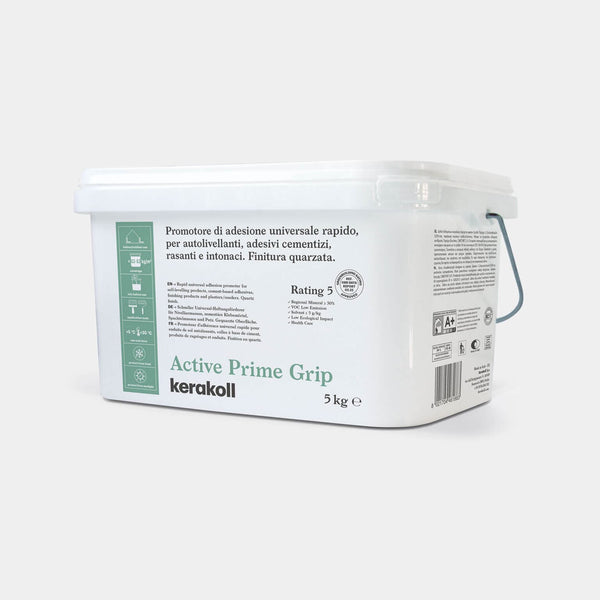
The bonding bridge is usually a dispersion primer containing quartz or corundum fillers. After application, the substrate surface gains a rough, porous layer to which the next layer can bond both mechanically and chemically. The bonding bridge is not a filler — it does not level or smooth — it solely creates the conditions for adhesion.
After drying, the bonding bridge feels slightly damp to the touch — this is not a defect but a sign of an active bonding surface. The next layer must not be applied before the prescribed drying time has elapsed.
The bonding bridge cannot be used without limits on every non-absorbent substrate. It does not solve problems on moving, unstable, or deeply damaged substrates: it does not cover substrate defects and after some time, the system will detach along with the bonding bridge. The substrate’s strength must always be checked beforehand.
In the case of old tiles, the quality of the tile adhesion must also be examined: if there are voids under the original tile or the tile is loose, these tiles must be removed before applying the bonding bridge.
The bonding bridge is used before tile adhesive when laying tile on tile, before applying plaster on smooth concrete, under leveling compounds on putty, and before brushable waterproofing on polished surfaces. In these cases, the bonding bridge is the foundation of the entire system’s durability.
Browse our bonding bridges or request advice to assemble the right system for preparing non-absorbent substrates.
The Kerakoll Color Collection is an integrated project that includes innovative materials - resin, cement, handcrafted wood, microcoatings, paints, and glazes - coordinated on a single color palette.