Have a question? Call +3670 400 2040 or write to hello@masterworks.hu 🇭🇺
The substrate and the covering never move exactly the same way. Concrete expands with heat, screed shrinks, old coverings have loose elasticity, and the temperature fluctuations of underfloor heating cycles are each enough to cause stress at the weakest point. This weakest point is usually in the joint or under the tile. The decoupling membrane blocks this stress transfer.
A decoupling membrane is a thin, flexible layer laid between the substrate and the tile adhesive. It does not fully adhere to the substrate — it intentionally mechanically separates the movement of the substrate and the covering. The substrate moves, the membrane absorbs the movement, and the covering barely senses the stress at a system level.
In underfloor heating systems: turning the underfloor heating on and off causes cyclic temperature fluctuations. The screed and substrate concrete expand and contract — and the covering would take on all these movements if there were no separating layer. Using a decoupling membrane is highly recommended as a system solution for underfloor heating.
With cracked or unstable screed: if the screed has cracks but is still solid and stable, the decoupling membrane prevents the cracks from appearing in the covering. This is a workable solution but not the only one — in cases of severe screed defects, replacing the screed is the only durable solution.
When installing new covering over old, existing covering: the old and new coverings represent layers with different movements. The decoupling membrane acts as an intermediate layer separating the movements of the two systems.
At critical points where thermal expansion is locally high: door thresholds, zones next to columns, fields formed inside large surfaces.
The two concepts partly overlap: the decoupling membrane inherently has crack isolation functions. The term "crack isolation" usually emphasizes the function that prevents crack propagation — separation is secondary. In many cases, a single product meets both requirements.
The membrane reduces stress and the risk of cracking but does not replace the mandatory edge expansion strips and field expansion joints. Expansion joints are the main tool for managing movement in the entire covering system; the membrane only provides supplementary protection.
Browse our decoupling membranes or request advice for assembling your substrate and covering system.
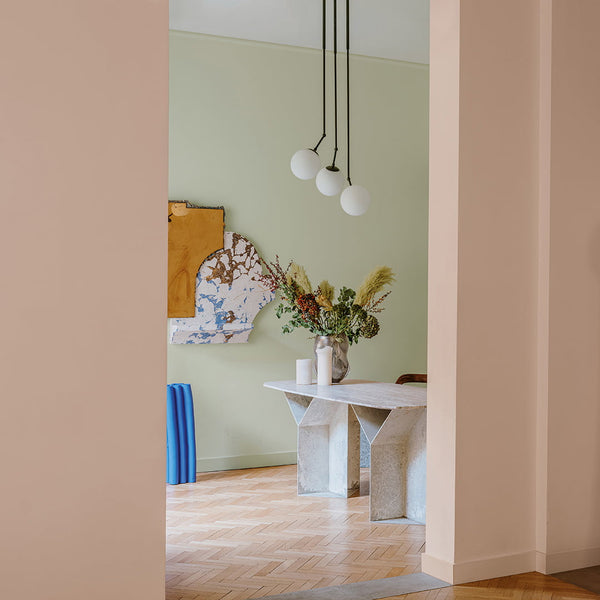
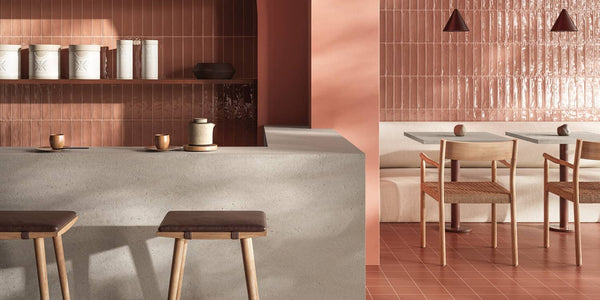
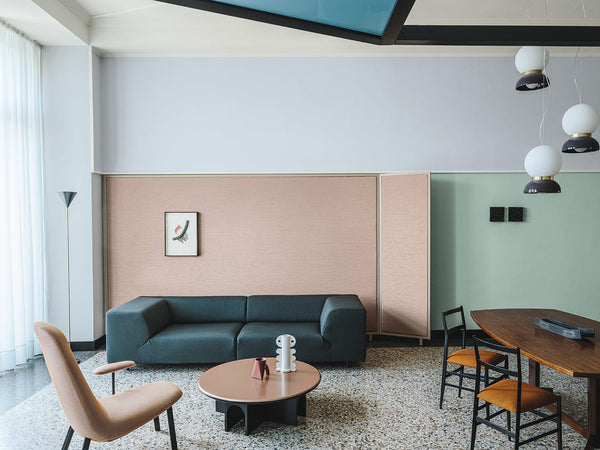
The Kerakoll Color Collection is an integrated project that includes innovative materials - resin, cement, handcrafted wood, microcoatings, paints, and glazes - coordinated on a single color palette.
+3670 400 2040
hello@masterworks.hu
Showroom
Radnóti Miklós St. 23
1137 Budapest
Route
Warehouse
GSP warehouse
Schwarz Dávid St. 1
2220 Vecsés
Route


© 2026, Masterworks Hungary
Green building. Interior design.