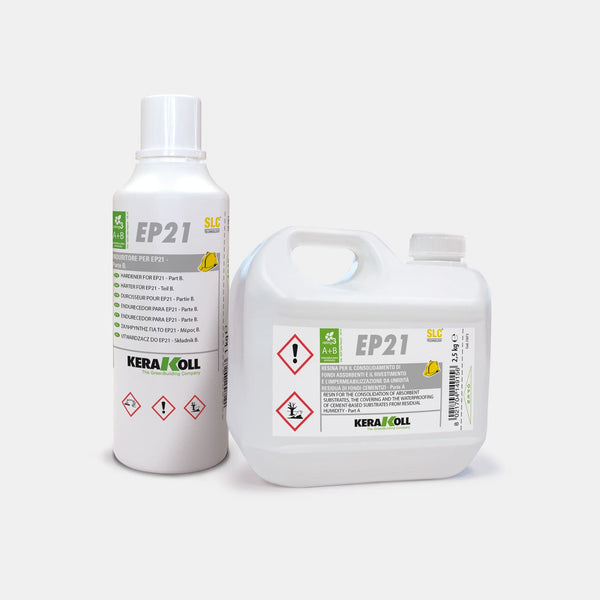
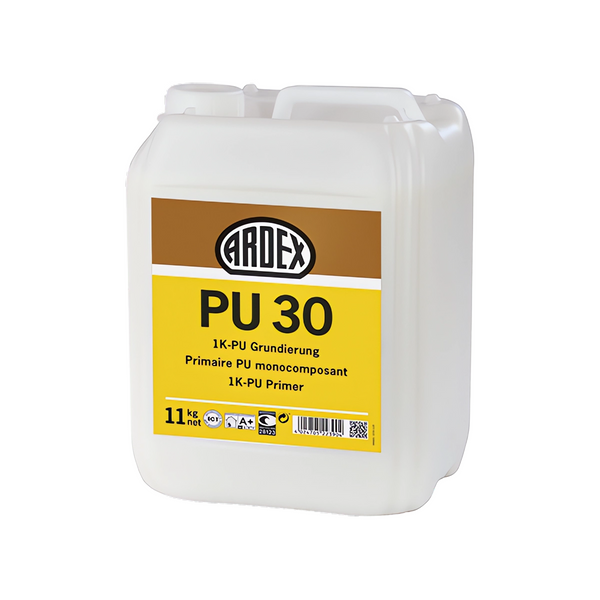
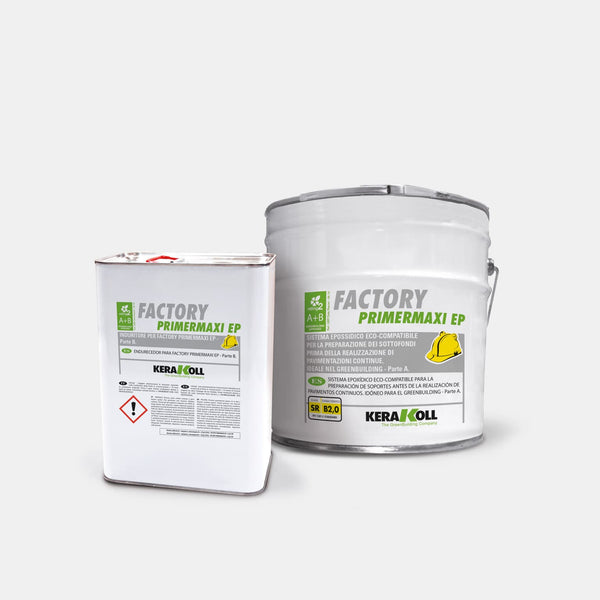
Coatings used on industrial floors are not paints — they are significantly more complex systems chemically and mechanically. The priming is also different: it is not about controlling absorbency or improving adhesion in the usual sense, but about creating a chemical bond between the concrete and the coating. A reactive — typically two-component epoxy — primer is suitable for this task.
The reactive primer penetrates the concrete structure and bonds through a chemical reaction — not by physical surface adhesion like dispersion primers. This results in a much stronger, more durable bond that does not peel off under mechanical stress, chemicals, or moisture. For industrial coating systems — epoxy floors, polyurethane waterproofing, chemically exposed surfaces — this type of primer is the only suitable solution.
Reactive primer is used:
Applying reactive primer is a professional task. For two-component systems, precise mixing ratios and processing times must be strictly followed — any deviation results in an incomplete chemical bond, and the coating’s durability cannot be guaranteed. Surface preparation of the concrete — grinding, diamond polishing, or shot blasting — is essential for the primer’s adhesion: the primer cannot properly penetrate a closed concrete surface.
The moisture content of the concrete substrate is critical: epoxy primer forms wet bubbles on concrete with high moisture content. Moisture measurement must be performed before priming.
Deep primer is dispersion-based and balances absorbency on highly porous substrates — it does not create a chemical bond. Reactive epoxy primer bonds physically and chemically and is only suitable under reactive coating systems (epoxy, PU). The functions and application areas of the two materials are not interchangeable.
Browse our reactive primers or request advice to select the right coating and primer combination for your industrial floor system.
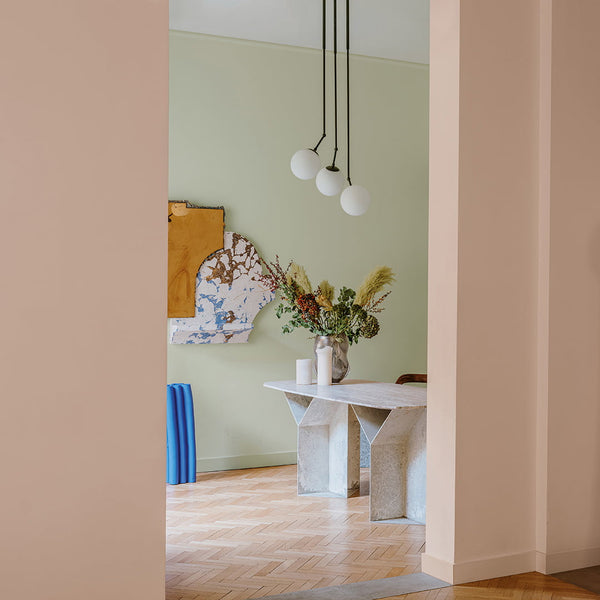
The Kerakoll Color Collection is an integrated project that includes innovative materials - resin, cement, handcrafted wood, microcoatings, paints, and glazes - coordinated on a single color palette.