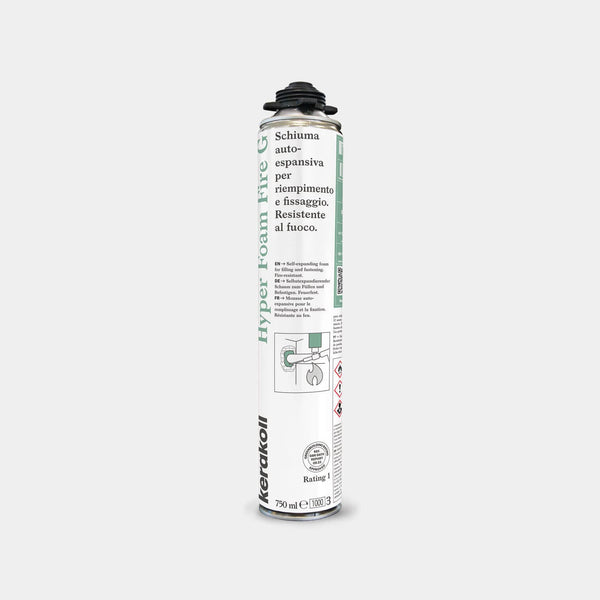
Spray foam is one of the most versatile sealing materials in the construction industry: it can fill gaps, be used for window and door installation, and solve thermal and sound insulation tasks all with a single material. Its ease of use has made it popular even among non-professionals — but incorrect application results in just as faulty an outcome as with any other material.
Spray foam is a one-component or two-component polyurethane foam that expands after application to fill cavities and gaps, then cures. Once cured, it forms a solid foam with thermal insulation, soundproofing properties, and mechanical stability, which can be cut, sanded, and painted.
For window and door installation: Spray foam seals the gap between the frame and the wall opening — providing fixation, thermal insulation, and sealing functions simultaneously.
For filling indoor and outdoor gaps: At mechanical penetrations, pipe passages, and structural gaps.
For thermal and sound insulation applications: Closed-cell spray foam variants offer good thermal insulation; open-cell variants are primarily suitable for soundproofing.
At fire-critical joints — such as mechanical penetrations through fire-rated walls or openings in stairwell walls — fire-resistant (intumescent) spray foam must be used. This foam expands when exposed to fire and seals the opening. It cannot be replaced with standard spray foam.
Spray foam expands by 30–50% beyond the cavity volume during curing — the amount applied must be adjusted accordingly. Too much foam can deform the window frame. Pre-wetting the substrate (with a fine water mist) speeds up curing and improves adhesion. Excess foam can be trimmed off with a sharp knife after curing.
Browse our selection of spray foams or request advice to choose the right foam type and fire protection class for your application.

The Kerakoll Color Collection is an integrated project that includes innovative materials - resin, cement, handcrafted wood, microcoatings, paints, and glazes - coordinated on a single color palette.