| Keralevel Eco | Keralevel Eco LR | Keralevel Eco Ultra | |
|---|---|---|---|
| Price | 12,550 HUF / 25 kg | 17,750 HUF / 25 kg | 20,300 HUF / 25 kg |
| Ready for tiling | 24 hours | 2 hours | 2–6 hours |
| For walls? | No | Yes | No |
| Thickness | 1-10 mm | 1-25 mm | Up to 20 mm |
| Strength | C25 (25 N/mm²) | C20 (20 N/mm²) | C30 (30 N/mm²) |
| For resilient flooring? | No | No | Yes |
| Material consumption | ≈1.5 kg/m²/mm | ≈1.3 kg/m²/mm | ≈1.9 kg/m²/mm |
| Pot life | 4 hours | 20 minutes | 20 minutes |
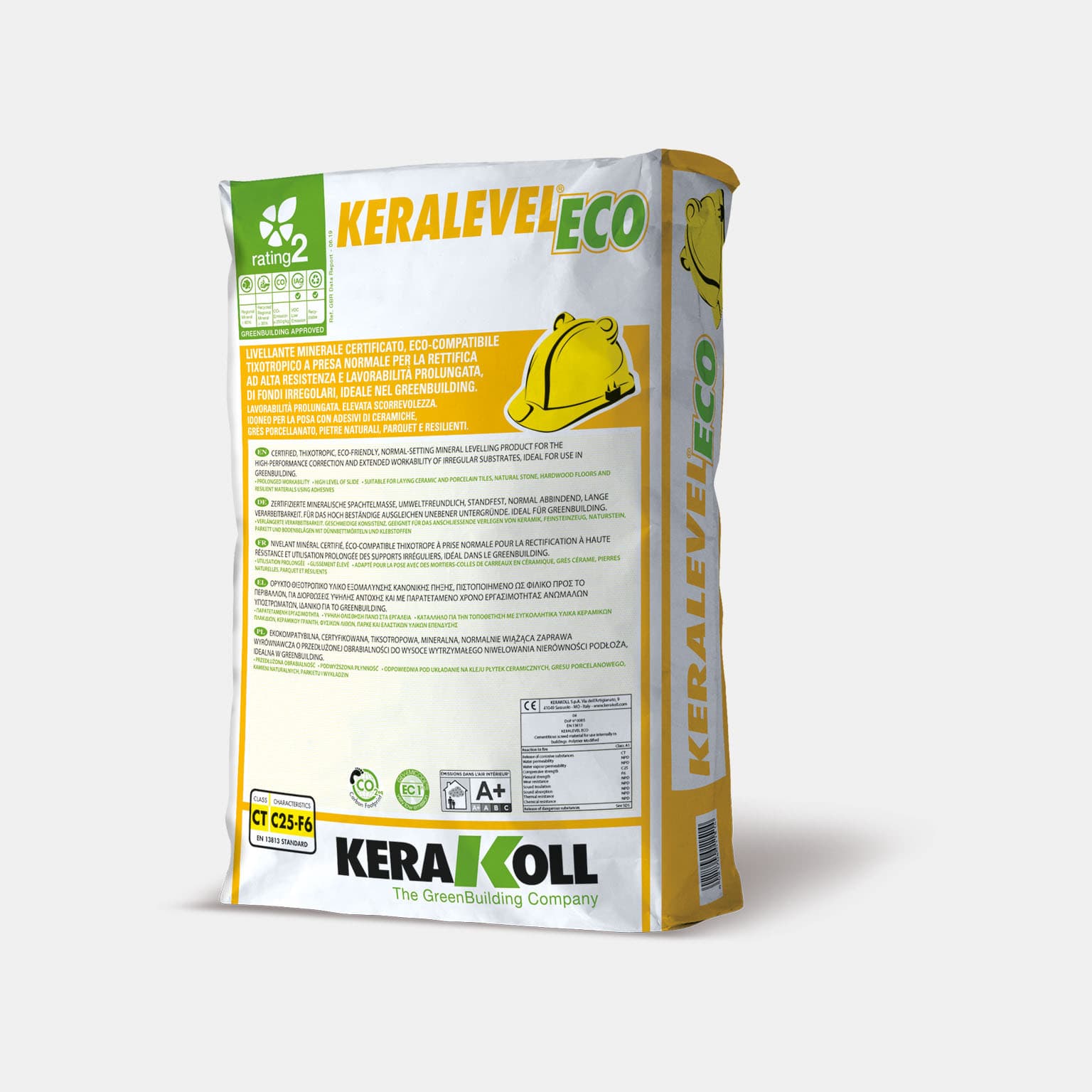
12,550 HUF / 25 kg
Example: 150 m² office, 5 mm levelling, new porcelain tile flooring.
Why this one?
Material cost example (50 m², 5 mm):
Technical:
Maximum layer thickness: 10 mm in one application. If more is needed: 10 mm first layer → wait 24 hours → 10 mm second layer.
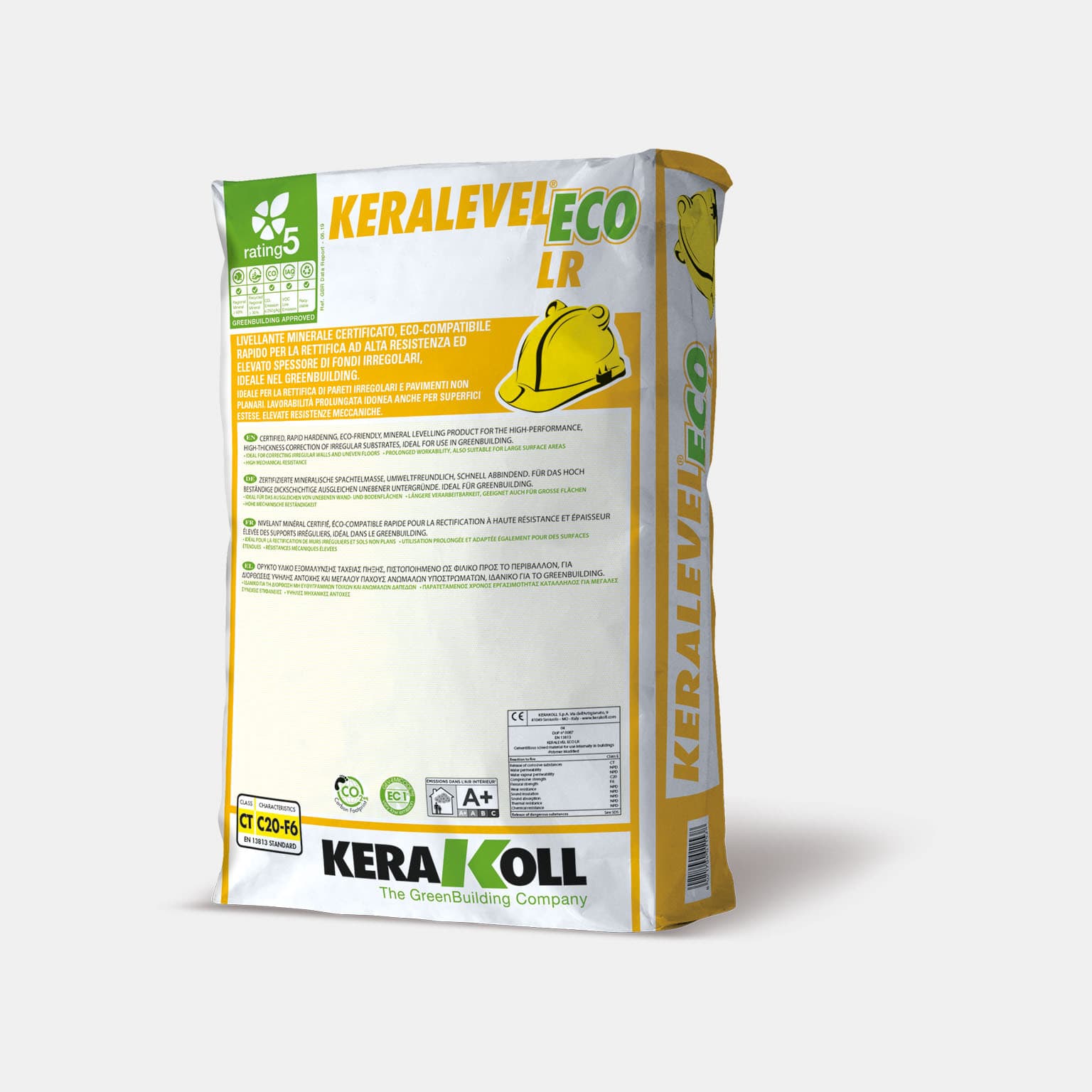
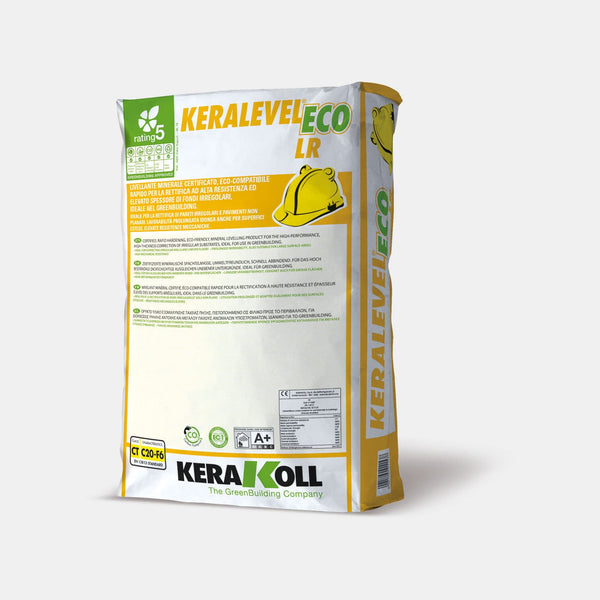
HUF 17,750 / 25 kg (+41% vs. Eco)
Example: Shower renovation — the wall is uneven and it needs to be ready by tomorrow.
Why this one?
Material and labor cost calculation (50 m², 5 mm, floor only):
Why is the material more expensive?
Rapid-setting technology — special additives. But if the project is completed one day faster, the labor savings offset the additional material cost.
Technical:
Maximum layer thickness: 25 mm in one pass — this is LR’s greatest advantage. If more is needed: 25 mm first layer → wait ≈2 hours → second layer.
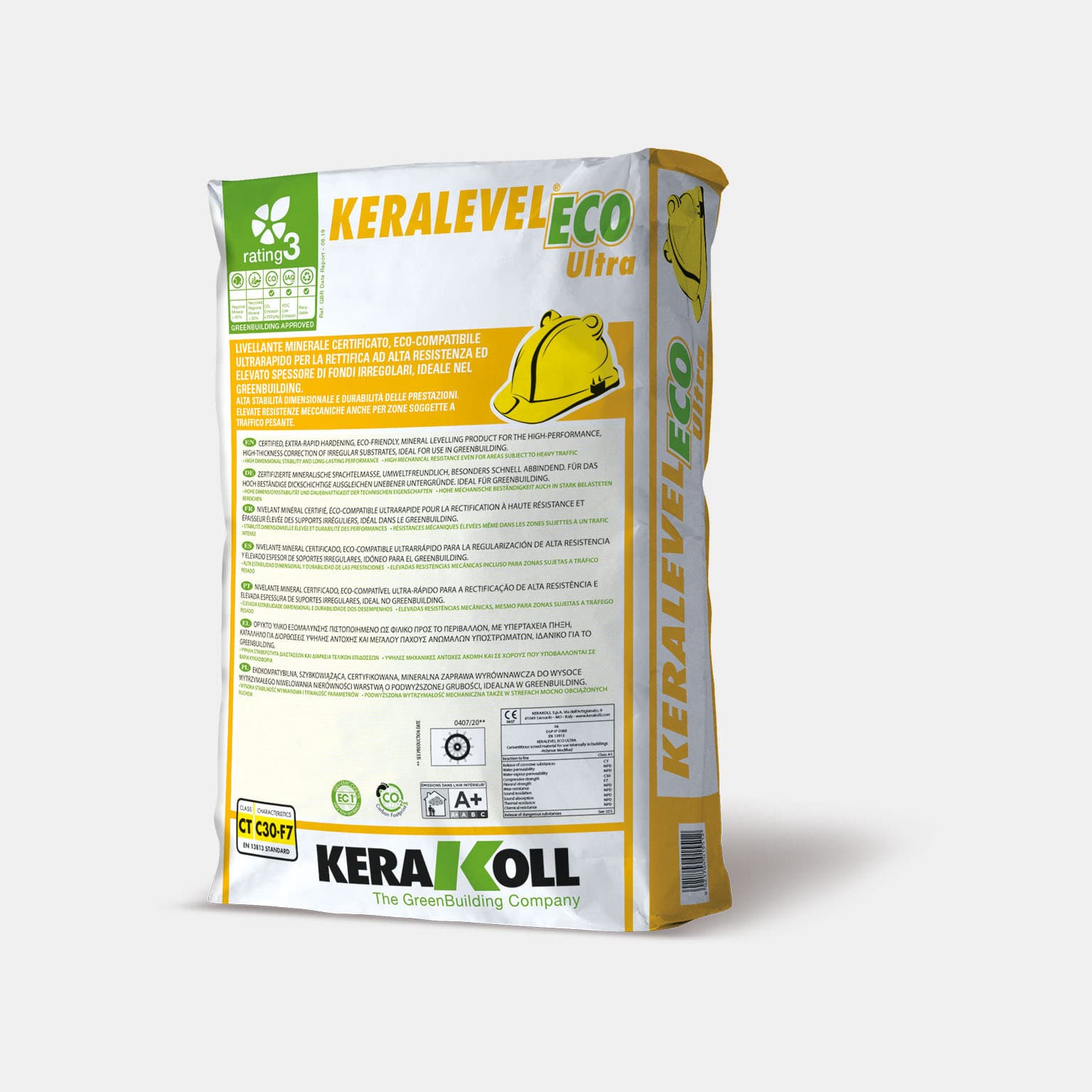
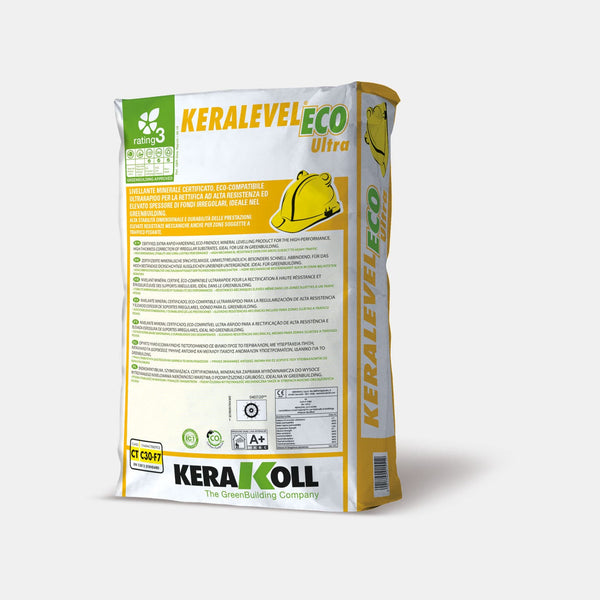
20,300 HUF / 25 kg (+62% vs. Eco)
Example: 300 m² restaurant, rubber flooring, 500+ guests per day.
Why this product?
Price comparison (50 m², 5 mm, vinyl flooring):
Why is it the most expensive?
Technical:
Maximum layer thickness: 20 mm in a single application.
| Substrate type | Primer |
|---|---|
| Concrete, cement screed | Universal Wall Primer |
| Porous concrete, old screed | Active Prime Fix |
| Drywall, gypsum plaster | Active Prime Fix (MANDATORY for gypsum) |
| Old tiles, stone | Keragrip Eco Pulep adhesion promoter |
| Painted surface | Mechanically remove the paint, then apply primer |
| Asphalt, bitumen | Not suitable — Keralevel does not adhere to bituminous substrates |
Important: Moisture measurement is mandatory. Maximum 2% CM (cement), 1% (gypsum). Damp substrate = no adhesion.
Chosen: Keralevel Eco LR
Why? There was a wall surface too (shower area), and it had to be ready by tomorrow. 2 hours before tiling + vertical surface = LR.
Chosen: Keralevel Eco Ultra
Why? LVT flooring — an ultra-smooth surface is required, with commercial use (30 people, office chairs). C30 strength + vinyl compatibility = Ultra.
Chosen: Keralevel Eco
Why? Large area, with 2 days available, and ceramic tiles. 4-hour pot life = one mix for the entire area. Lower price. Eco.
Chosen: Keralevel Eco Ultra
Why? Rubber flooring + 300 guests per day + heavy equipment in a commercial kitchen. C30 strength + EN 12529 rolling load resistance = Ultra. The repair cost (if it were done incorrectly with Eco) would have exceeded the price of Ultra.
Chosen: Keralevel Eco LR
Why? A vertical surface (wall) + the sloping surface of the stairs. Only LR is suitable for vertical/sloping surfaces. There is no alternative.
Keralevel LR or Ultra for faster vinyl flooring installation?
Ultra. LR can be tiled after 2 hours for ceramic tiles, but for vinyl/resilient flooring, Ultra provides an ultra-smooth surface. LR is not optimized for resilient floor coverings.
Why isn't Ultra the best choice everywhere?
For ceramic tiles, C30 strength is unnecessary — C25 (Eco) is more than sufficient. You would be paying extra for a feature you do not use. If there is no vinyl flooring and no commercial traffic, Ultra is wasteful.
Can Eco be used on walls?
No. It will slide down. Only LR can be used on walls — its thixotropic formula combined with rapid setting ensures that it stays in place on vertical surfaces.
Why is LR more expensive if it is weaker (C20 vs. C25)?
Because its speed comes not from its strength, but from its specialized rapid-setting technology. C20 is sufficient for residential and commercial use. The premium lies in the time saved, not in the strength.
Is there a cheaper alternative to Ultra for vinyl flooring?
There is no safe alternative. If the substrate is not ultra-smooth, bonding the vinyl can be problematic, as the flooring will reveal any unevenness. The cost of repairs (re-bonding or possibly replacing the flooring) will exceed the price of Ultra.
Which one is the “best”?
There is no “best” option, only the one that is “right for the project”:
❌ Applied to a damp substrate → It will not adhere and will flake off
✅ Solution: Use a moisture meter — max. 2% CM (cement), 1% (gypsum). Damp substrate = wait for it to dry or dry it.
❌ No primer → Poor adhesion, cracking, dusty surface
✅ Solution: Use a primer suitable for the substrate (see the table above)
❌ Not de-aerated (no spiked roller) → Air bubbles, weak surface, cracking
✅ Solution: Roll over the surface with a spiked roller within 5–10 minutes of application — mandatory!
❌ Layer too thick in a single application (e.g. Eco 15 mm) → Cracking, drying problems
✅ Solution: Observe the maximum layer thickness: Eco 10 mm | LR 25 mm | Ultra 20 mm
❌ Flooring installed too quickly → The substrate is not yet sufficiently strong and the flooring may lift
✅ Solution: Observe the waiting time: Eco 24 hours | LR 2 hours | Ultra 2–6 hours
❌ Incorrect water-to-powder ratio → Too runny: low strength | Too thick: does not level, air bubbles
✅ Solution: Measure precisely — 25 kg powder + 6–6.5 litres of water (depending on the product)
❌ Dusty, loose substrate not cleaned → Poor adhesion, delamination
✅ Solution: Vacuuming + primer. If very loose: mechanical cleaning (sanding, chiselling).
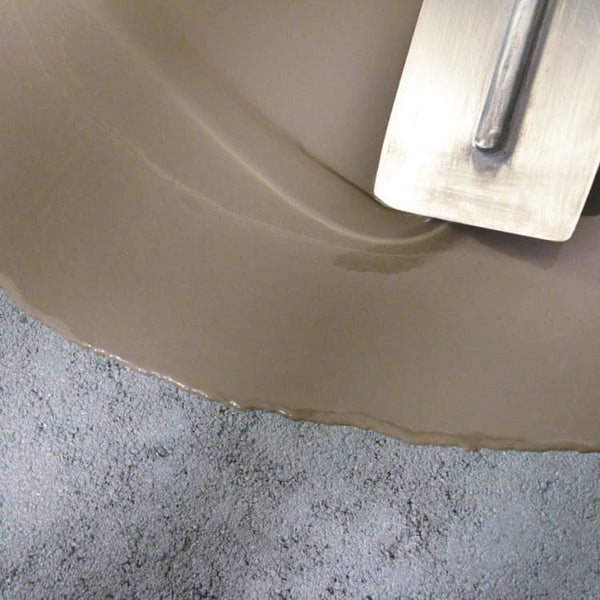
Keralevel Eco LR is unique: ready for tiling in 2 hours + suitable for vertical surfaces. This combination is rare on the market. If the project is urgent AND there are walls to cover, LR solves both problems.
Keralevel Eco Ultra: C30-F7 strength + marine certification + vinyl-optimized. C30 strength (30 N/mm²) is an advantage in commercial applications, while the marine certification (IMO) proves its resistance to extreme conditions.
Keralevel Eco: 4-hour pot life + thixotropic. On large areas (50+ m²), there is no need to remix—you can work with a single mix for hours.
Important: If you find a better alternative for your project, use it. We are not saying that Keralevel is the best choice everywhere—we are saying that in these situations (fast + walls, vinyl + C30, large area + long pot life), Keralevel solves the problem effectively.
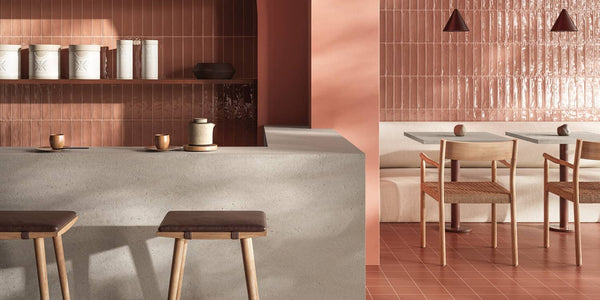
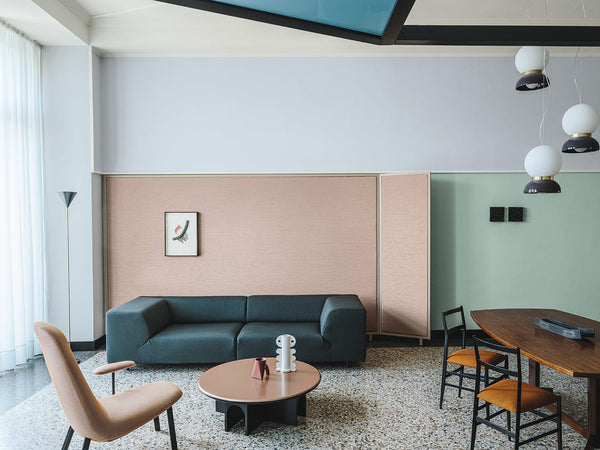
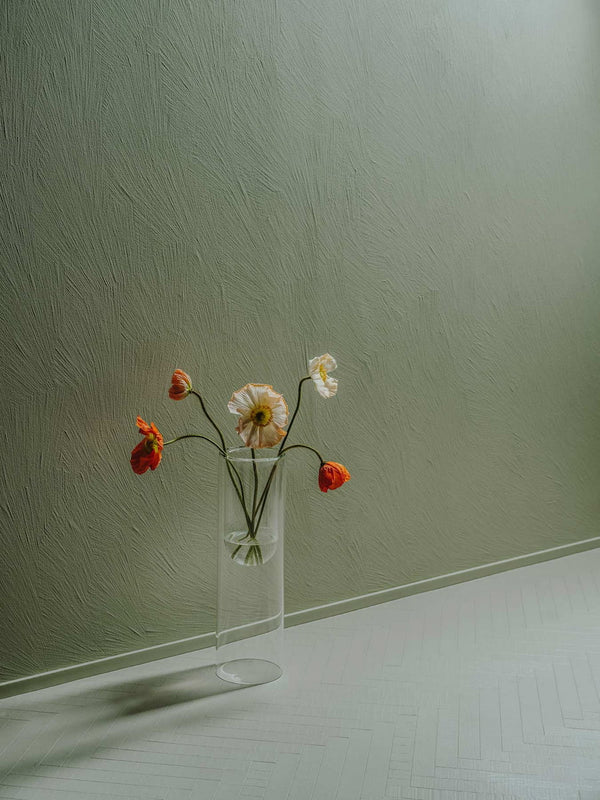
Kerakoll Design is an integrated project featuring innovative materials—resin, cement, handcrafted wood, microcoatings, paints and glazes—all coordinated within a single colour palette.