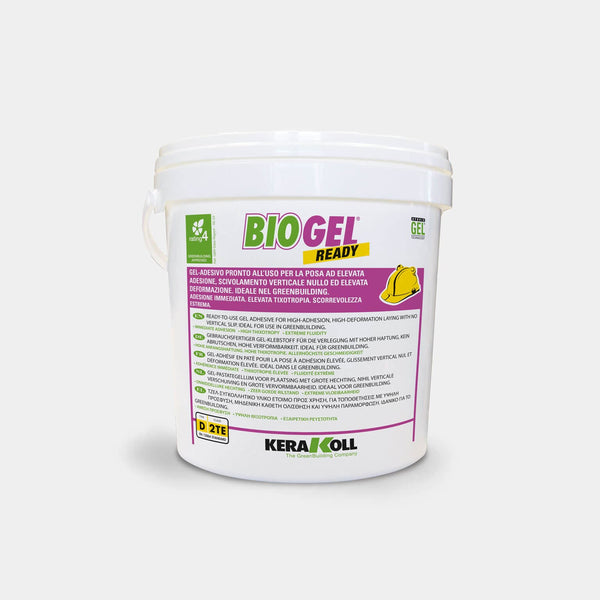
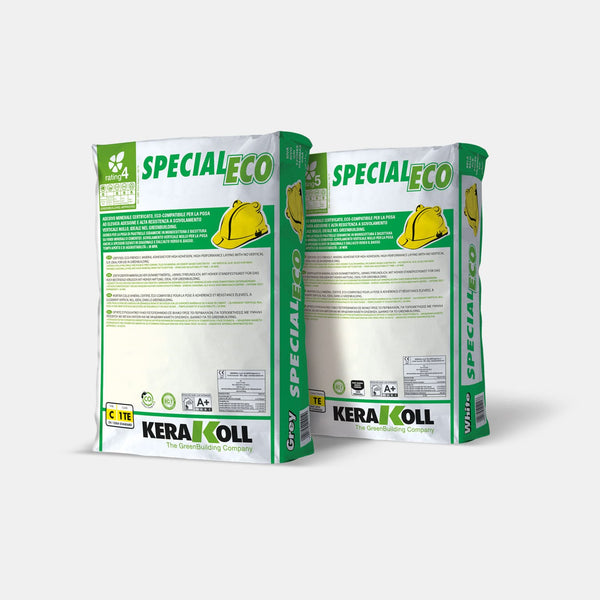
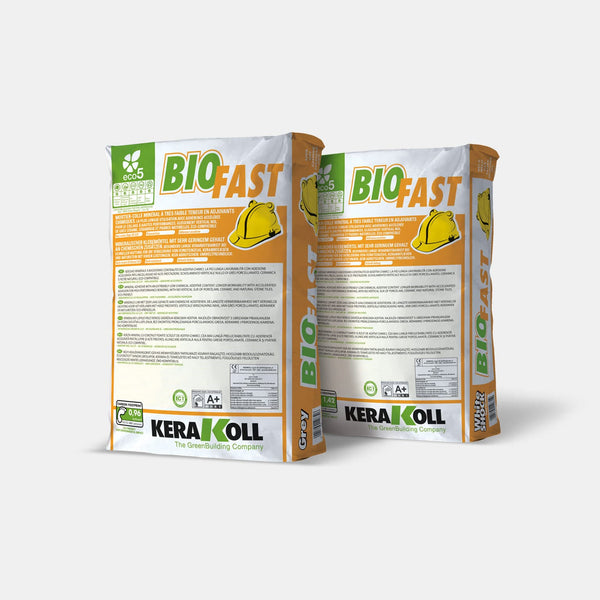
Choosing tile adhesive is not simply about "using tile adhesive" — it involves considering the performance class according to the EN 12004 standard, the material of the covering, the type of substrate, and the expected load together. Using an adhesive of the wrong class is one of the main causes of premature detachment of the covering.
The European EN 12004 standard classifies tile adhesives into main categories: C (cement-based), D (dispersion), and R (reactive). The most important parameter — bond strength — is indicated by levels 1 and 2, and flexibility by S1 and S2:
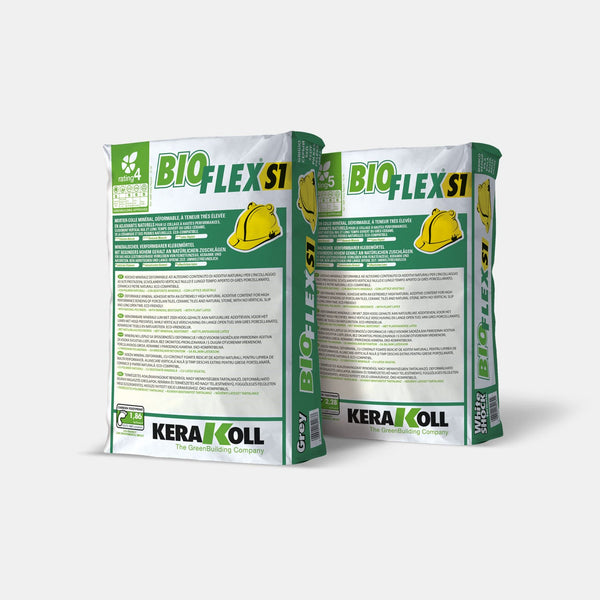
Large format tiles (over 60×60 cm): Due to the weight and size of large tiles, greater bond strength and more even application are required. A minimum of C2 S1 is recommended.
Outdoor use: Frost-resistant adhesive is mandatory. Non-frost-resistant adhesives lose their bonding strength due to freeze-thaw cycles.
Underfloor heating: Adhesives with flexibility class S1 or S2 are needed to compensate for thermal movement.
Natural stone: White cement-based adhesive is recommended, especially for light and semi-transparent stones — grey cement may cause discoloration.
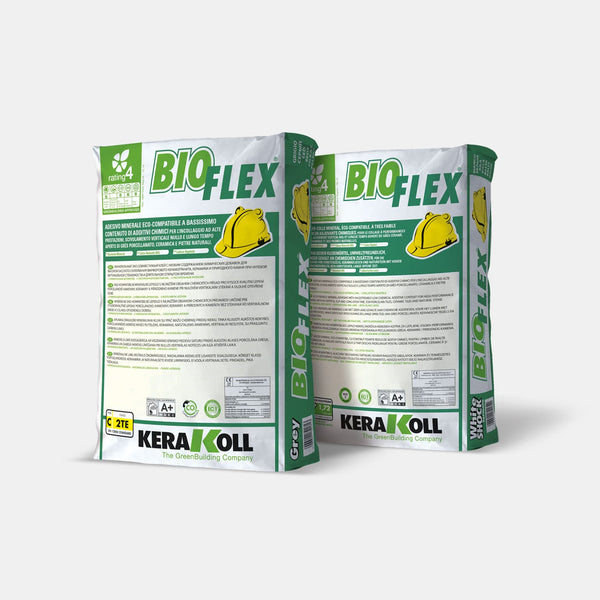
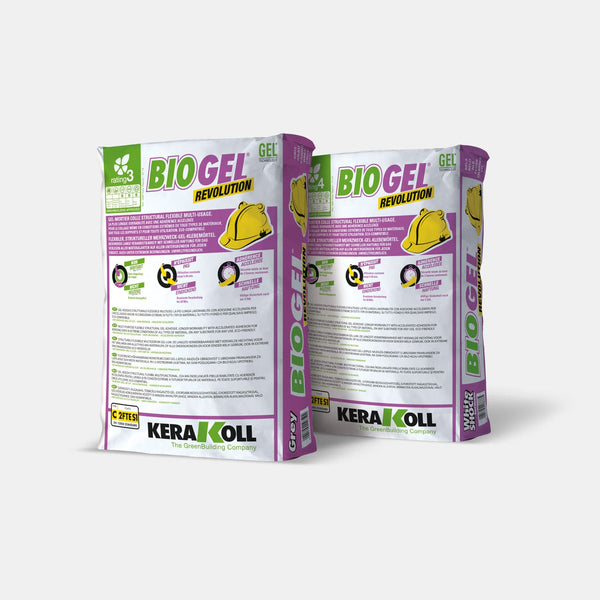
Porcelain tile: Closed, non-absorbent surface. Adhesive marked C2 TE (reduced slip, extended open time) provides reliable adhesion even on the closed surface of porcelain.
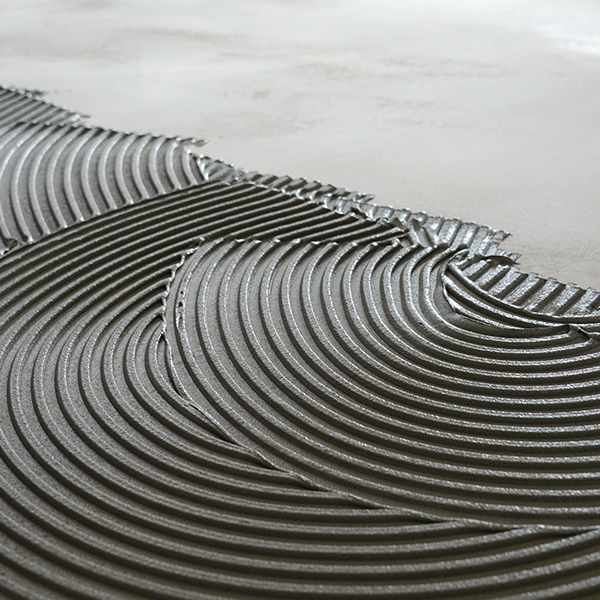
Standard tile adhesive should be applied in layers of 3–6 mm thickness (thin bed). On uneven substrates where irregularities must be compensated with adhesive, thick-bed adhesive (10–20 mm) can be used — but this does not replace substrate leveling.
Browse our tile adhesives or request advice to select the appropriate adhesive class for your covering and substrate type.
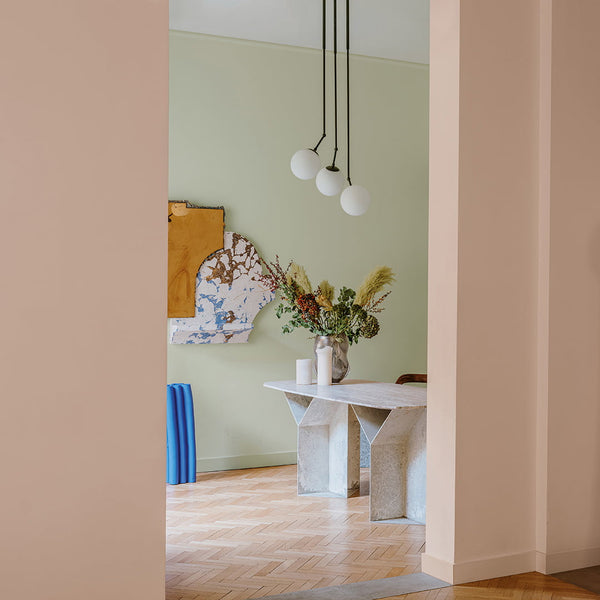
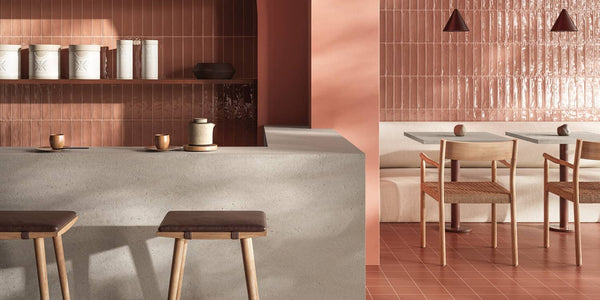
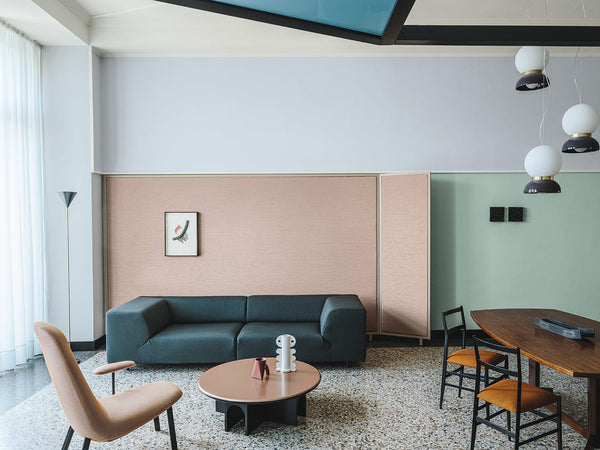
Kerakoll Color Collection is an integrated project featuring innovative materials—resin, cement, handcrafted wood, microcoatings, paints, and glazes—all coordinated within a single color palette.