

Lime plaster: what is it for and when should you choose it?
Lime has been the material of walls for millennia — then came cement, which ruined many old walls. In this article, we go through what lime plaster is really for, where and why it is worth choosing — and honestly, where it is not needed. The goal is for the decision to be based on facts, not marketing promises.
The Kerakoll Biocalce line is based on natural hydraulic lime (NHL 3.5, EN 459-1) — this is the modern, certified version of the classic material with which old houses were built.
What is lime plaster (NHL 3.5)?
The base material of Biocalce is pure, marly limestone, traditionally burned in vertical kilns at ~800–1000 °C without clay or cement — at a much lower temperature than Portland cement clinker. The resulting binder hardens in two ways: partly by reacting with water, and partly over time by absorbing carbon dioxide from the air, carbonating — meaning the wall gradually strengthens over years. Only lime that meets the EN 459-1 standard can be called "natural" (NHL): this is not a label but a controlled technical classification.

The main virtue of lime plaster: it breathes
If we had to highlight one property of lime, it is vapor permeability. The Biocalce Intonaco has a vapor diffusion resistance significantly lower than cement (μ ≈ 6 compared to cement’s ≈ 20), and lime is also hygroscopic — it absorbs and releases moisture from the air. Thus, vapor passes through the wall, evaporates outward, and the surface remains dry. Cement, on the other hand, blocks moisture: the wall cannot dry out, moisture gets trapped inside, leading to plaster detachment, salt efflorescence, and mold.

λ = thermal conductivity factor. It shows how well a solid material conducts or releases heat.
This has two direct consequences. First, the drier surface and the natural alkalinity of lime create an environment where mold finds it harder to settle — this is not due to chemicals but the material itself (Biocalce’s antibacterial and antifungal effects are confirmed by independent ISO 846 tests). Second, accuracy is important: lime manages moisture, not chemical pollutants in the air — refreshing indoor air is the job of ventilation. Both work together, not instead of each other.
Why is it better on old walls than cement?
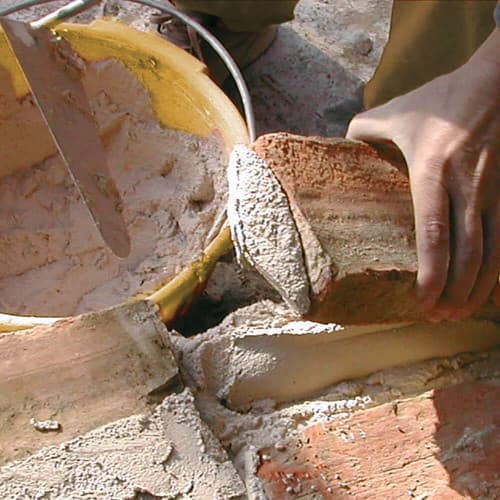
Lime is a soft, compatible, and reversible material with old masonry: it can be removed from historic bricks or stones without damage — this is a principle of heritage conservation, accepted by heritage authorities. Cement, polymer, or epoxy resin systems, on the other hand, are often incompatible with old substrates and damage the wall itself upon removal.

Moreover, lime is salt-resistant: in the Anstett test, the lime–pozzolan combination expands less than 0.8%, while Portland cement expands about 40% — because natural lime does not form the expansive salt (ettringite) typical of cement. It is also flexible: it follows movement as fine hairline cracks, not large cracks, and free lime partially "welds" these over time. (Important: lime tolerates small movements; it does not solve structural defects.)
What is true for every wall: ecology and low emissions
Lime has two advantages that matter not only on old walls. First, it is ecological: lime is burned at much lower temperatures than cement (lower embedded CO₂), and the plaster absorbs CO₂ from the air during setting. Second, it has low emissions: it is a mineral binder with virtually no volatile organic compounds — Biocalce is classified in the strictest EC1 Plus-GEV emission class. These two advantages apply to every wall, even if the wall is otherwise dry and intact.
Where is lime plaster the best choice?
The performance advantages of lime are conditional: they truly show on old, damp, moving, or intentionally breathable walls — but appearance and ecology favor lime on every wall. For these walls, lime is not a matter of taste but the right material:
- Old and heritage buildings, restoration. Solid brick, stone, and mixed masonry where respect for original materials and reversibility are expected. The layering: Biocalce Rinzaffo (bonding bridge) → Biocalce Intonaco (base plaster) → Biocalce Intonachino Fino (finishing) → breathable paint.
- Damp, salt-affected walls. Here, simple breathable plaster is not enough — a targeted, WTA-certified wall drying (sanation) system is needed. We have a separate detailed guide on this: When breathable plaster is enough and when a wall drying system is needed →
- Moving buildings. Settling, clay soil, slope, wooden structure — where flexibility and hairline crack tolerance matter.
- Breathable, natural new construction. Wooden structure, natural insulation, where lime is part of a continuous, vapor-open wall system (Natural systems).
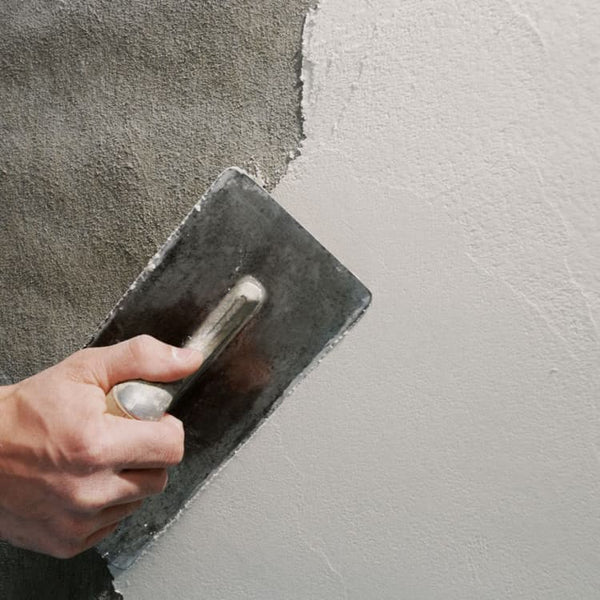
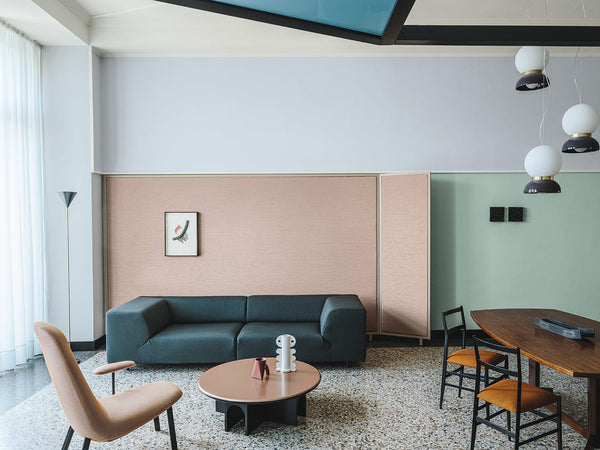
- High-quality interior spaces. Genuine mineral noble surfaces — Biocalce Marmorino, Biocalce Spatolato, tadelakt-like surfaces — whose depth and matte shine plastic paint cannot imitate. For painted, breathable surfaces, use Biocalce Tinteggio lime paint, Biocalce Silicato Puro Pittura silicate paint, or indoors the Absolute Paint in Color Collection’s 150 colors.
The golden rule of use
Vapor permeability applies to the entire wall: vapor passes through every layer, and the least permeable layer determines the whole wall. Any single dense layer anywhere — plastic paint, vapor barrier foil, dense cement plaster — neutralizes all the advantages of lime. Therefore, never paint lime plaster with acrylic or plastic paint: the finishing layer should be limewash, silicate, or mineral paint. And the exterior side should be at least as open as the interior so the wall can always dry outward.
Where lime plaster is NOT needed — let’s be honest
This part rarely appears in brochures, yet it builds trust. In a sound, dry, modern apartment or house — with functioning damp-proofing and proper ventilation — the conditions that make lime valuable are absent; replacing cement with lime here does not make a significant difference. Two things still speak for lime here: appearance and ecology (lower embedded carbon, EC1 Plus emissions). On traditional new construction walls (formwork block + vapor barrier + foam + gypsum), lime applied on top is purely cosmetic. If you only want the limewashed look on a sound wall, breathable silicate or lime paint achieves the same matte effect more cheaply — though for skimmed stucco surfaces, the lime material itself is needed. In dry, ventilated rooms, gypsum plaster is also perfectly suitable.
Frequently asked questions
What is lime plaster for?
For breathable, compatible plastering of old, damp, salty, or moving walls and heritage buildings, as well as for genuine mineral decorative surfaces. It lets the wall dry and does not trap moisture like cement.
What is the difference between lime and cement plaster?
Lime is vapor-permeable (μ ≈ 6 vs. cement ≈ 20), flexible, salt-resistant, and reversible; cement is denser, stiffer, and traps moisture in old, damp walls.
Can lime plaster be painted with normal wall paint?
Not recommended — plastic/acrylic paint seals the wall. Use breathable lime, silicate, or mineral paints (e.g., Biocalce Tinteggio, Silicato Puro Pittura, or indoors Absolute Paint).
Does lime plaster make indoor air healthier?
Lime manages moisture: it creates drier walls less favorable to mold. Chemical cleaning of air (CO₂, volatile compounds) is done by ventilation, not plaster. So the wall structure is healthier — but good ventilation is irreplaceable.
Is lime plaster good for damp, salt-affected walls?
Yes, but there a special wall drying (sanation) system is needed, not just simple plaster — see our guide on wall drying.
Biocalce products featured in the article
- Biocalce Muratura / Biocalce Pietra — masonry and joint mortar for old and exposed masonry.
- Biocalce Rinzaffo — bonding bridge / base plaster.
- Biocalce Intonaco — breathable base plaster (classic lime plaster).
- Biocalce Intonachino Fino — fine finishing plaster.
- Biocalce Tinteggio / Silicato Puro Pittura / Absolute Paint — breathable paints.
- Biocalce Marmorino / Biocalce Spatolato — mineral decorative plasters.
The full line is available in the Kerakoll Biocalce collection, and the detailed Biocalce brochure in Hungarian (PDF) can be downloaded here.
Not sure if your wall needs lime or another system? Request a free on-site survey and quote at hello@masterworks.hu or by phone at +36 70 400 2040 — we will tell you the right material for your wall.