


Skim coat or drywall joint compound? Comparison of Biogesso Rasa&Decora and Stucco mangiaVOC
Every wall must be smooth before painting. Fresh paint does not conceal unevenness - on the contrary, every scratch, streak and joint shows up in side lighting (grazing light). That is why a thin skim coat is applied between plaster, concrete or drywall and the paint: filler, or, for drywall, first joint compound.
In this guide, we first explain in clear terms what filler and joint compound are, what they are used for, and how they differ. We then introduce Kerakoll's two Biogesso products - the Biogesso Rasa&Decora mangiaVOC filler and the Biogesso Stucco mangiaVOC drywall joint compound - compare them, and find out how much they actually cost per square metre.
In short: Filler smooths the entire wall surface before painting, typically in a 1-3 mm layer. Drywall joint compound fills the joints between panels and screw heads, together with reinforcing tape. For painted drywall (Q2-Q3), Biogesso Stucco is sufficient; for a Q4 finish or an unpainted feature wall, Biogesso Rasa&Decora is applied over the entire surface after joint finishing.
What is filler, and what is it used for?
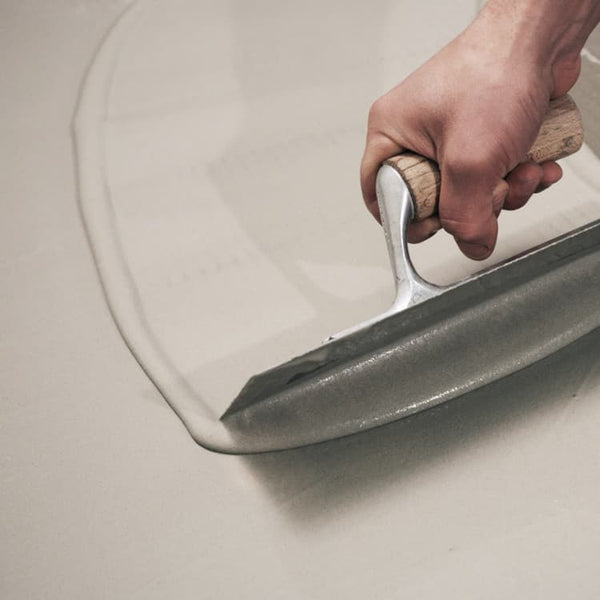
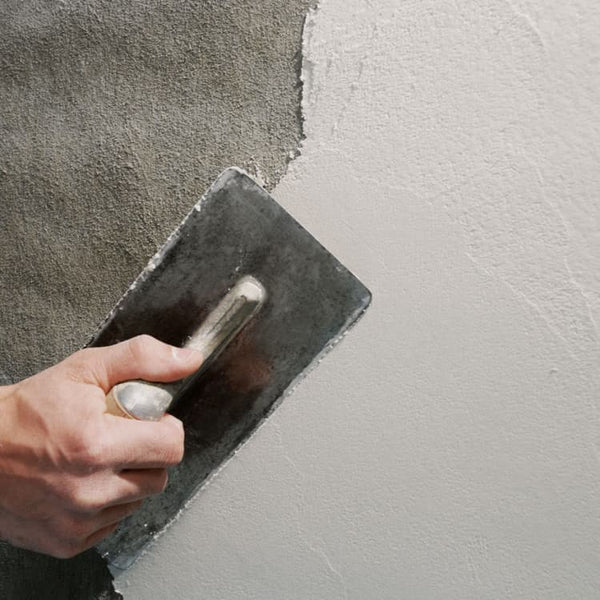
Filler, also known as skim coat or fine skim coat, is a very fine-grained compound mixed with water and applied to the wall with a filling knife in a thin layer - typically 1-3 mm thick. Its purpose is simple: it fills minor imperfections and creates a uniform, smooth surface beneath paint or wallpaper.
Gypsum-based fillers are the most common choice indoors: they are easy to apply, easy to sand, and produce a white, smooth surface. A good filler remains workable long enough to be spread evenly over a large area without overlaps - otherwise the wall will look streaky and patchy in grazing light.

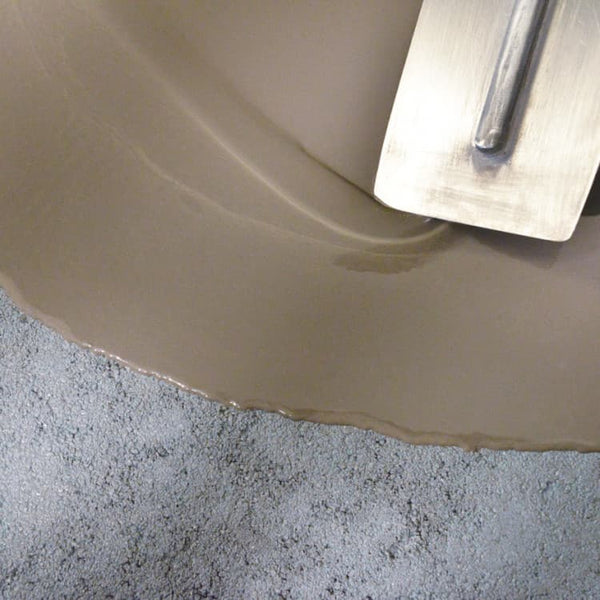
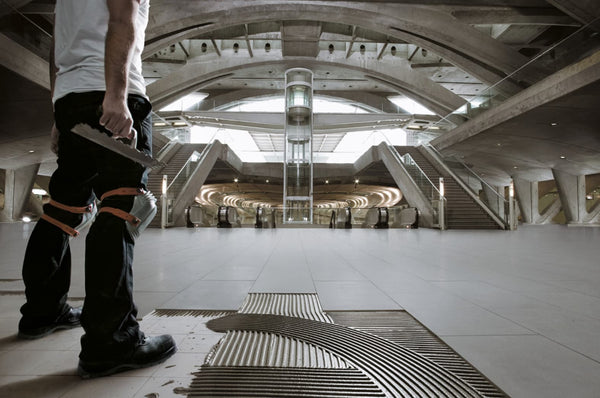
Filler smooths out minor imperfections - the difference is immediately visible in grazing light.
What is drywall joint compound?
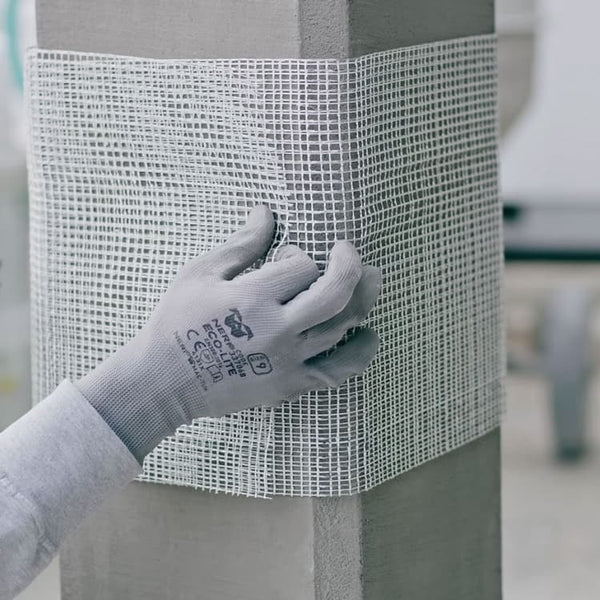
Gaps remain between drywall panels, while screw heads leave small indentations. Joint compound - also known as drywall filler, jointing compound or filler - fills these in. Drywall joints are finished with reinforcing tape: paper tape is embedded in fresh joint compound, while self-adhesive mesh tape is applied before filling. One or two skim coats follow. If this is done poorly, the joint will still show through on the wall after painting.

From left to right: paper tape embedded in fresh joint compound, first skim coat, broadly applied finishing coat.
Plasterboard surface quality is classified using Q levels. Q1 is basic joint filling (for example, under tiles), Q2 is a surface ready for standard painting, and Q3 provides increased smoothness, with the board surface also skimmed thinly alongside the joints. The highest level, Q4, means full-surface plastering - required for glossy or dark paint and in strong grazing light. A good joint compound therefore does more than just fill; it also smooths.

Illustration - from left to right: Q1, Q2, Q3, and Q4 surface quality levels on a plasterboard wall.
Plaster filler or joint compound: what is the difference?
| Plaster filler | Plasterboard joint compound | |
|---|---|---|
| Where are they used? | the entire wall surface | plasterboard joints and screw heads |
| What do they focus on? | long working time, seamless smoothing | good adhesion, fast drying, with reinforcing tape |
| Layer thickness | thin, 1-3 mm | thicker in the joint, thin on the surface |
| Result | Smooth, paintable wall | Invisible joints at Q2-Q3 level |
There is some overlap between the two: many joint compounds can be skimmed over the entire surface of plasterboard, and most fillers can be applied to plasterboard. The question is what each one is optimized for.
What makes Kerakoll Biogesso different?
Biogesso is Kerakoll's natural, eco-compatible, gypsum-based binder. The two products - Rasa&Decora and Stucco - are based on the same binder and differ from most conventional fillers and joint compounds in two properties; certified indoor-air data comes in addition.
1. mangiaVOC: the wall also absorbs formaldehyde
Formaldehyde is one of the most common indoor air pollutants. It can enter the air from, among other things, furniture boards, adhesives, and certain paints. According to the manufacturer, Biogesso turns the wall into an active surface: it captures formaldehyde - the main volatile organic compound (VOC) in indoor air - and converts it into a neutral (inert) compound. The manufacturer cites a Eurofins test for this (Report No. 392-2014-00107501RevA).
One important condition: the effect works on the surface. According to the Rasa&Decora data sheet, only breathable Kerakoll decorative finishes preserve it; potassium silicate paint or a covering must not be applied, while other decorative finishes may neutralize it. As an unpainted, exposed surface, it retains all its properties according to the manufacturer.

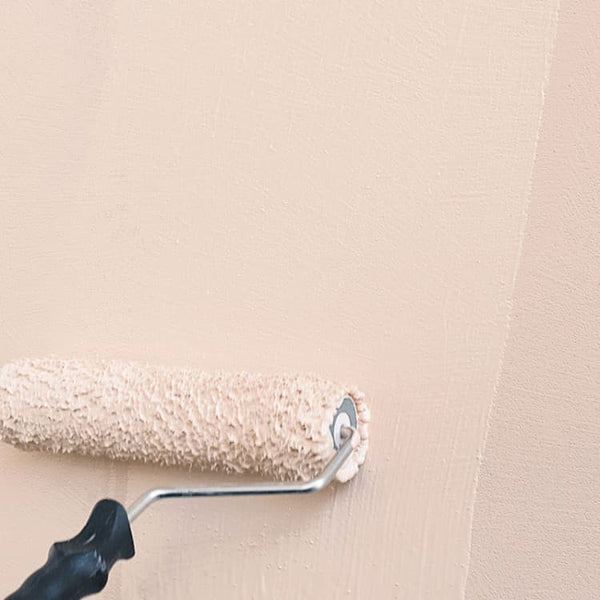
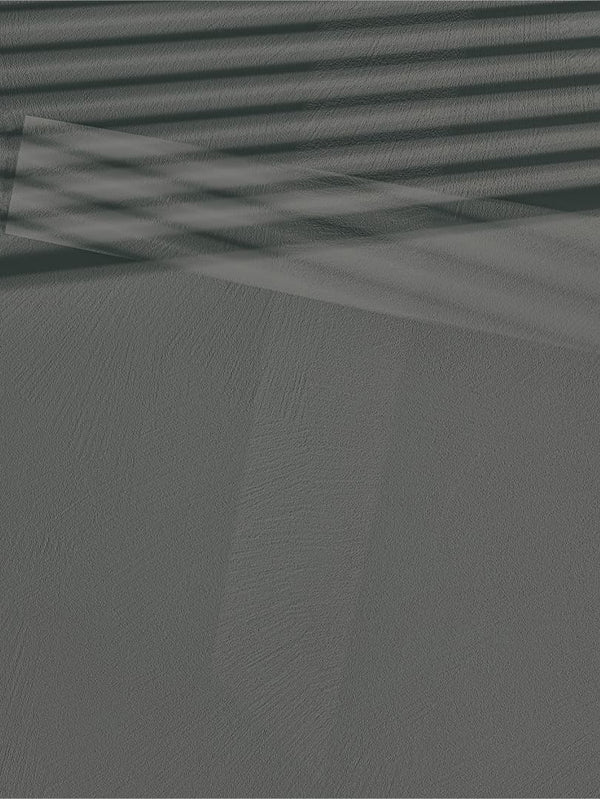
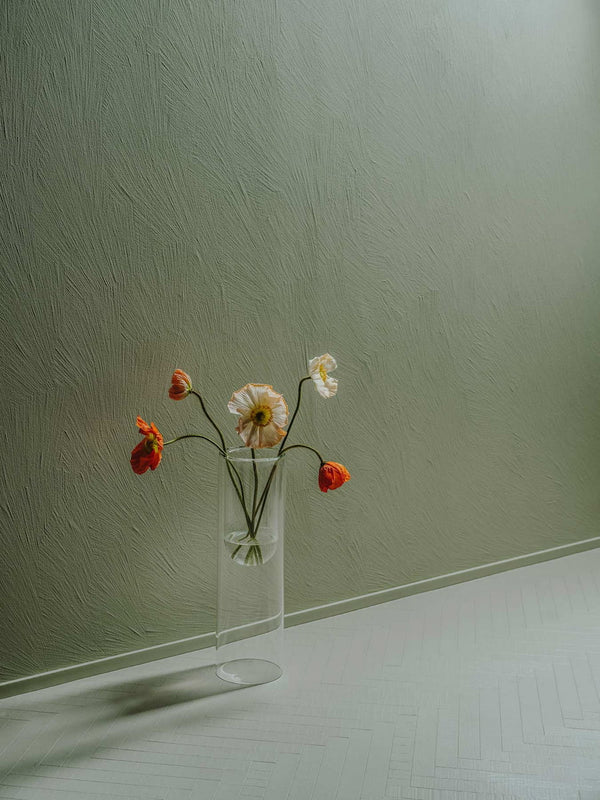
Illustration: an unpainted, exposed decorative wall with a smoothed finish - this is how the mangiaVOC effect is fully preserved.
2. 90% less dust during mixing
According to the manufacturer, both products emit 90% less dust during mixing than conventional products. This protects the applicator's health and keeps the work area clean - especially important when renovating an occupied apartment. Important: this applies to mixing; sanding will still produce dust.

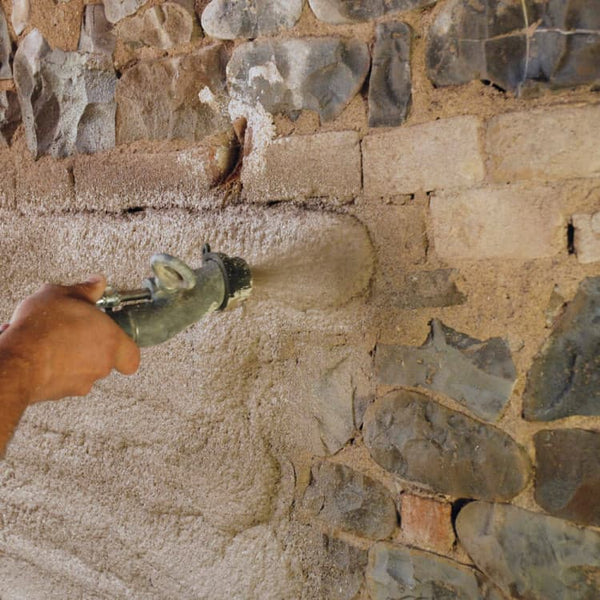
It produces almost no dust when mixed - a significant benefit when renovating an occupied home.
Plus: certified indoor-air data
Both products have a Class A1 fire rating (non-combustible), which is common for gypsum-based products. In terms of indoor emissions, both belong to the best A+ class of the French scale; Stucco also has EC 1 plus GEV-Emicode certification, meaning that the product itself has been verified to have very low emissions. Both are included in the Kerakoll GreenBuilding assessment (Rasa&Decora: Rating 2, Stucco: Rating 3).
Biogesso Rasa&Decora mangiaVOC - filler and decorative plaster in one
Rasa&Decora is a filler for the entire wall surface - and also a decorative plaster. What sets it apart is its long working time and the fact that it creates a finished decorative wall without painting.

- Long working time. The mixture has a pot life of at least 60 minutes (at 23 °C and 50% humidity; shorter in warm conditions). Two perpendicular coats create a uniform, flat surface that, according to the manufacturer, passes the raking-light test.
- A finished decorative wall without painting. Applied in two coats, it creates a glossy, warm off-white mirror effect; a faux-marble effect can be achieved with a short stainless steel finishing trowel. It can be personalized with linseed oil and natural earth pigments.
- Suitable for many substrates. Old and new cement, lime and gypsum plaster, gypsum and faux-marble walls, drywall, gypsum brick and fiber-reinforced cement panels, and precast concrete. The substrate must be absorbent; new plaster may be smoothed only after curing shrinkage has occurred and after scoring.
- Bathroom and kitchen. The manufacturer also recommends it for these rooms. It is gypsum-based, so it is not suitable for areas directly exposed to water (around showers or bathtubs).
- Can be painted or wallpapered after approximately 24 hours (23 °C, 50% humidity; longer in cold or humid conditions). Without painting, the decorative - mirror or faux-marble - finish can be left as applied.

Illustration: decorative surface with a mirror and faux-marble effect.
Biogesso Stucco mangiaVOC - drywall joint filler, smoothing compound and adhesive
Stucco is the material for drywall work. A creamy, lump-free paste that adheres well and smooths without overlap - one bag can handle several tasks.

- Reinforced jointing. The joint must be reinforced with mesh or microperforated paper tape, followed by two coats of filler. When smoothing, apply the first coat with a stainless steel or plastic finishing trowel with rounded edges, pressing firmly.
- Q1–Q3 surface. According to the manufacturer, it covers all three levels and is specifically suitable as the covering coat for drywall walls.
- Fast work. It dries and can be sanded quickly; the pot life is at least 40 minutes.
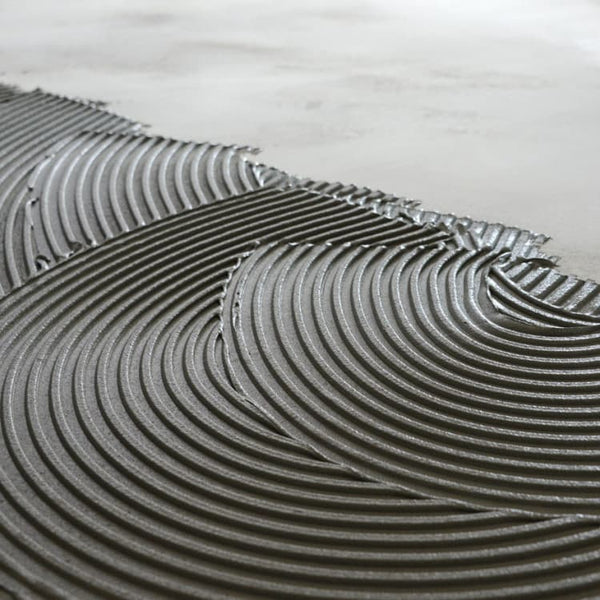
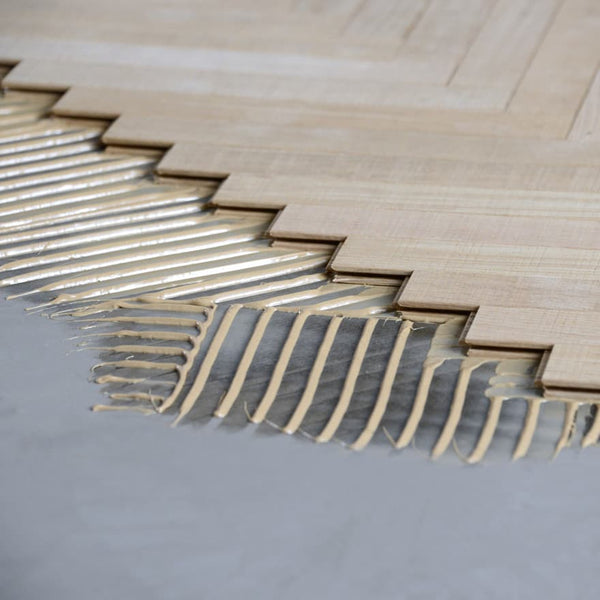
- Also an adhesive. It bonds drywall, fibre-reinforced board and decorative stucco to absorbent surfaces - in dabs, continuous perimeter strips or full-bed application with a notched trowel.
- Minor repairs. It can also be used for microcracks in plaster and minor application imperfections.
One important consideration: during application, the room temperature and humidity should remain constant so that the boards do not expand.
Rasa&Decora or Stucco? Comparison table
| Biogesso Rasa&Decora | Biogesso Stucco | |
|---|---|---|
| Product type | Skim coat and decorative fine plaster | Drywall joint compound, smoothing compound and adhesive |
| Standard | EN 13279-1, B3 | EN 13963, 3B |
| Main purpose | Full-wall smoothing; exposed decorative surface | Drywall jointing; covering coat; board bonding |
| Substrate | Plaster, precast concrete, gypsum, drywall | Drywall, fibre-reinforced board; plaster repairs |
| Pace | Remains workable for longer (pot life ≥ 60 minutes) | Dries and can be sanded quickly (pot life ≥ 40 minutes) |
| Surface | Can be painted, or used without painting for a mirror or faux-marble effect | Q1–Q3 level: under tiles and paint |
| Particle size | 0–100 µm | 0–60 µm |
| Fire resistance | A1 | A1 |
| Indoor emissions | French A+ class | French A+ class; EC 1 plus GEV-Emicode |
| GreenBuilding Rating | 2 | 3 |
| Packaging | 25 kg | 5 kg |
On a drywall wall: which one is needed?
- Painted drywall wall (Q2–Q3): Stucco is sufficient - for both the joints and the full covering coat.
- Glossy or dark paint, strong grazing light (Q4): Stucco on the joints, followed by full-surface skim coating with Rasa&Decora.
- Decorative wall without painting on drywall (mirror, faux marble): Stucco on the joints first, followed by Rasa&Decora over the entire surface.
- Fully smoothing a plastered, precast concrete or mixed-substrate wall: Rasa&Decora.
More expensive? What does it really cost?
Biogesso is a premium product, but it is worth looking not at the price per bag, but at the cost per square metre and what you get for it. Both products require approximately 1 kg/m² per millimetre, so the price per kilogram is also the price per square metre for a 1 mm layer. Traditional products require a similar amount, but this may vary by product.
| Price / kg (≈ HUF/m² at 1 mm) | |
|---|---|
| Traditional interior gypsum skim coat (20 kg bag) | ≈ HUF 350–380 |
| Biogesso Rasa&Decora (25 kg: HUF 14,500) | ≈ HUF 580 |
| Premium drywall joint compound (5 and 25 kg bags) | ≈ HUF 850–920 |
| Biogesso Stucco (5 kg: HUF 5,350) | ≈ HUF 1,070 |
The Biogesso prices are the Masterworks September 2026 list prices; the other figures are indicative ranges based on prices from Hungarian online shops in September 2026. You can find the current price on the product page.
Rasa&Decora: approximately HUF 400-470/m² more, but it also offers more
One example: a 50 m² wall with a total layer thickness of 2 mm requires ≈ 100 kg of material (without allowance). This means 4 bags of Rasa&Decora, HUF 58,000; or 5 bags of conventional gypsum skim coat, approximately HUF 35,000-38,000. The difference is ≈ HUF 20,000-23,000, or ≈ HUF 400-470 per square metre. In return for this amount, the wall:
- according to the manufacturer, it absorbs indoor formaldehyde;
- remains workable for a long time, which can mean less overlap and fewer subsequent repairs;
- emits 90% less dust during mixing;
- can be finished as a decorative wall without painting - in this case, both the paint price and the painting labour can be saved.
Interesting fact: per kilogram, Rasa&Decora is cheaper than premium drywall joint fillers - even though many people also use these to skim entire surfaces.
Stucco: approximately HUF 750-1,100 more per bag, but one product for several tasks
Stucco costs approximately 15-26% more per kilogram than premium joint fillers; for a 5 kg bag, this means a difference of around HUF 750-1,100. In return, one product can be used for joint filling, smoothing before painting, bonding boards and minor repairs - you do not need to buy several different materials separately. The 5 kg packaging also reduces leftover material for smaller jobs. The product is EC 1 plus certified. The Stucco data sheet does not specify the topcoat; for Rasa&Decora, the manufacturer requires breathable Kerakoll decorative finishes to preserve the mangiaVOC effect, so it is worth following the same approach with Stucco.
Finally, one general consideration: when skim-coating or working with drywall, the material price is often only a small part of the total cost alongside labour. A difference of a few hundred forints per square metre is therefore typically small compared with the total cost of the work.
Practical information for your purchase
- For indoor use only. Neither product is suitable for outdoor use.
- A solid, dry, clean substrate is required (the substrate beneath Rasa&Decora should also be absorbent). Crumbling areas must first be strengthened with Rasobuild Eco Consolidante; old paint, adhesive and plaster residue must be removed.
- Pay attention to the topcoat. Potassium silicate paint must not be applied over Rasa&Decora; breathable Kerakoll decorative finishes preserve the mangiaVOC effect.
- Do not remix. Do not add water or powder to material that has already started to set - this will not make it workable again.
- How much is needed? ≈ 1 kg/m² per millimetre, with a maximum of 3 mm per layer. One 25 kg bag of Rasa&Decora covers ≈ 25 m² at 1 mm, while one 5 kg bag of Stucco is enough for ≈ 5 m² with a 1 mm full-surface skim coat - and covers a much larger surface area when used only for joint filling.
- Application: between +5 °C and +30 °C. Storage: 6 months, in the original intact packaging, protected from moisture.
Frequently asked questions
What is the difference between skim coat and joint compound?
A skim coat smooths the entire wall surface before painting. Joint compound fills the joints between drywall boards with reinforcing tape. Many joint compounds are also suitable for smoothing, but skim coat is optimized for large surfaces, while joint compound is optimized for joints.
Which skim coat is needed for drywall?
For a painted drywall wall, Biogesso Stucco is sufficient both for the joints and the skim coat (Q2-Q3). For a Q4 finish or a decorative wall without painting, apply Rasa&Decora over the entire surface after filling the joints.
Can a skim-coated wall be left unpainted?
Yes, with Rasa&Decora: in two coats, it creates a glossy, elegant white mirror effect, and according to the manufacturer, it retains its mangiaVOC properties even without painting. A conventional skim coat must be painted.
What does mangiaVOC mean?
This is Kerakoll’s designation for Biogesso’s ability to absorb indoor formaldehyde and convert it into a neutral compound. The effect remains without painting, or beneath breathable Kerakoll decorative finishes.
Is Biogesso dust-free?
According to the manufacturer, it releases 90% less dust during mixing than conventional products. However, sanding still creates dust, just like with other skim coats.
How much skim coat is needed per square metre?
For Biogesso products, use ≈ 1 kg/m² per millimetre. So, a 2 mm skim coat requires ≈ 2 kg/m².
Which skim coat is suitable for bathrooms?
The manufacturer states that Biogesso Rasa&Decora is also suitable for bathrooms and kitchens. Since it is gypsum-based, it is not suitable for areas directly exposed to water (showers or around bathtubs) - these require a cement-based substrate, waterproofing, and tiles.
Which one should you choose?
If you want to smooth the entire wall - over plaster, concrete, or drywall - or you want a decorative wall without painting, Rasa&Decora is the right choice. If you’re working with drywall - joint filling, a skim coat beneath paint, board bonding, or a fast workflow - Stucco is the right product. On a decorative drywall wall, the two work together. Both are part of the mangiaVOC skim coat range.
Not sure which one is right for your wall? Contact us and we’ll help you choose the right system - you can also request a materials + labor package quote. We also provide installation services.
hello@masterworks.hu · +36 70 400 2040
Masterworks — official Kerakoll distributor in Hungary.