



Skim coat or finishing plaster: which one do you need for the wall? A comparison of the six Kerakoll Rasobuild Eco products
The wall must be smooth before painting. Paint does not conceal defects: patch repairs, hairline cracks and plasterboard joints all show through under side lighting (raking light). The wrong smoothing material can cause an even bigger problem: smoothing compound applied over loose paint will peel off together with the paint, and the work will have to be started again.

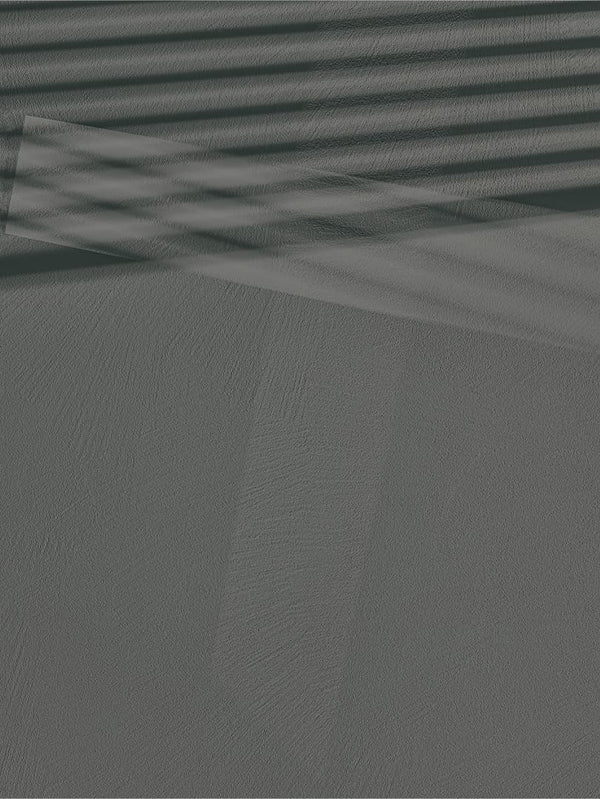
Under raking light, repairs and hairline cracks show through the paint.
In this guide, we explain in clear language what skim coat, smoothing plaster and joint filler are, and how to determine the condition of a wall. We then present Kerakoll's six Rasobuild Eco products — the Extrafino, Fino, Granello, Stucco RP, Top Fino and Top Granello materials — compare them, look at their cost per square metre, and see how they compare with Biocalce and Biogesso products, as well as an average skim coat on the market.
What are skim coat and smoothing plaster, and what are they used for?
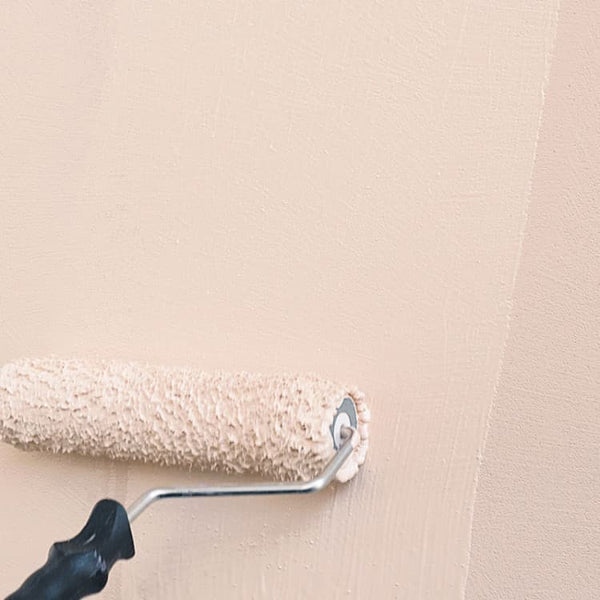
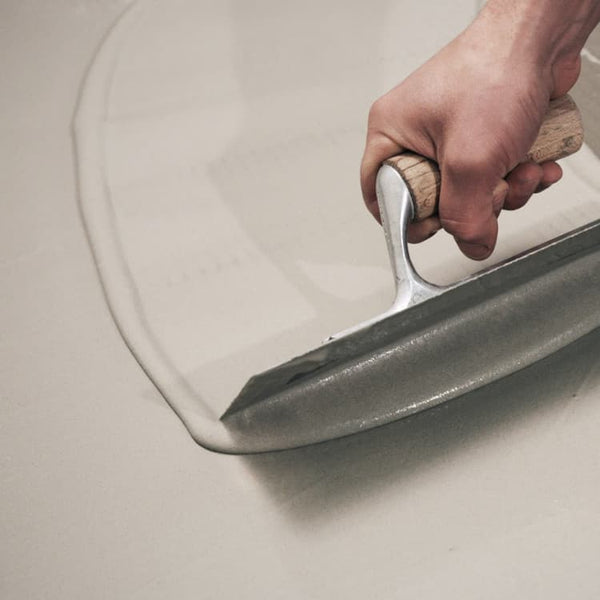
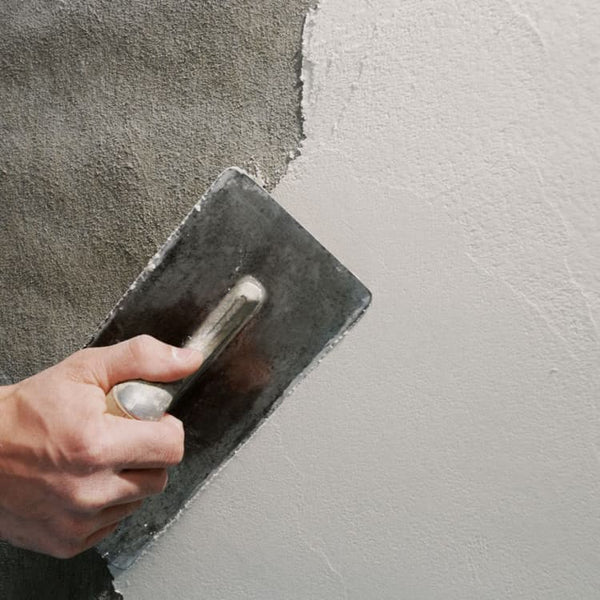
The skim coat and smoothing plaster are the final wall layer beneath the paint. From the outside in, the build-up is: paint, skim coat or smoothing plaster, plaster, masonry. They are applied in a thin layer with a smoothing trowel and have four functions:
- Levels. It fills the smaller and larger unevennesses in the plaster.
- Unifies. It turns a patchily repaired, mixed surface into a uniform base.
- Smooths. It creates a smooth surface on which the paint will be even.
- Prepares. It provides a base to which paint or wallpaper can be applied.

The skim coat or smoothing plaster is the final layer beneath the paint.
Skim coat, smoothing plaster, joint filler: what is the difference?
The industry does not use these terms consistently either. In this article, we use them as follows:
| Skim coat | Smoothing plaster | Joint filler | |
|---|---|---|---|
| What is it used for? | the extra-fine finishing layer for an already flat wall | levelling plaster with fine or medium particles | filling plasterboard joints and cracks |
| Layer thickness | thin, up to 2 mm | 5–20 mm, depending on the product | 1–2 mm per layer |
| Rasobuild Eco product | Extrafino | Fino, Granello, Top Fino, Top Granello | Stucco RP |
What does particle size mean?
Particle size is the size of the largest particle in the powder. The smaller it is, the smoother the surface. Among the three basic Rasobuild Eco smoothing products, the finer-grained product is intended for a thinner layer: Extrafino (0.25 mm) for up to 2 mm, Fino (0.8 mm) for 5 mm, and Granello (1.4 mm) for 10 mm.

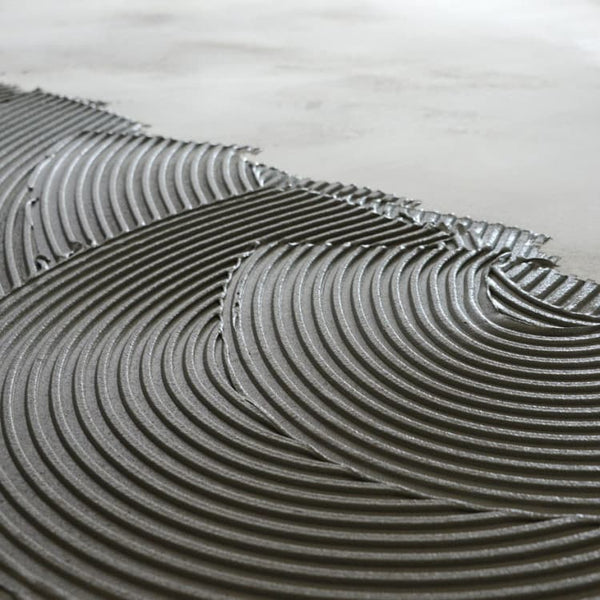
Fine-grained (0–0.8 mm) on the left, medium-grained (0–1.4 mm) on the right, shown close up in raking light: the smaller the grain, the smoother the surface.
What do absorbent and water-repellent mean?
An absorbent surface is one that takes in water: unpainted plaster and concrete are examples. A painted wall, glass mosaic, and plastic coating are non-absorbent, for example. The three standard Rasobuild Eco smoothing compounds (Extrafino, Fino, Granello) are intended only for absorbent surfaces. The Top variants can also be applied to non-absorbent surfaces, and are water-repellent themselves: water runs off the finished system.
The hidden problem: the substrate
The smoothing compound must be selected according to the substrate. If it is not suitable, the problem often appears only after painting. Pay attention to the following:
- Painted or non-absorbent wall. Extrafino, Fino, and Granello are not suitable for this. The Top variants are designed for these surfaces, but only if the paint is well bonded and compact. Smoothing compound applied over loose paint will detach together with the paint.
- Dusty, friable plaster. It must first be consolidated with Rasobuild Eco Consolidante; only then can the smoothing compound be applied.
- Gypsum plaster. The powder-based Rasobuild Eco smoothing compounds may only be applied after priming with Consolidante.
- Moving substrate: plasterboard, wood. Extrafino, Fino, and Granello are not recommended for these substrates. For joint filling and thin-layer smoothing, use the flexible Stucco RP; the Top variants can also be applied to plasterboard after priming with Consolidante.
How can you determine what the wall is like?
Four simple tests you can do at home can help you assess the situation. These are indicative tests and do not replace a professional assessment.
- Water-drop test. Splash water onto the wall. If it absorbs the water and becomes darker, the surface is absorbent. If the water beads up or runs off, it is non-absorbent: painted, coated, or treated with a water repellent (hydrophobic agent). The Top variants are not suitable for this latter type either; if the beading is pronounced, a professional should decide.
- Rubbing test. Run your palm along the wall. If it becomes dusty, or the plaster crumbles, the surface is friable: it needs consolidation.
- Adhesive tape test. Press strong adhesive tape onto the painted surface, then pull it off sharply. If paint comes off with it, the paint is loose: it must be removed before any smoothing compound is applied.
- Tapping. If the plaster sounds hollow when tapped, it has detached from the substrate. This area must be repaired before smoothing.

Adhesive tape test: if paint comes off with the tape, the paint is loose - it must be removed before smoothing.
What makes the Rasobuild Eco range different?
The six products fall into three groups:
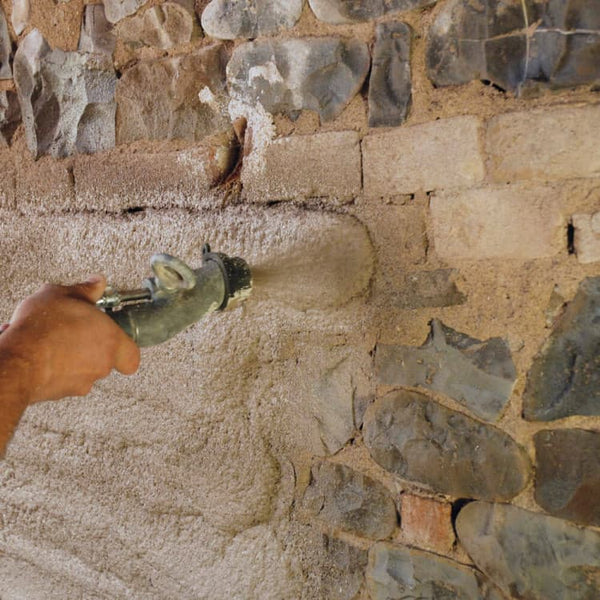
- Lime- and marble-powder finishing products: Extrafino, Fino, Granello. They are mineral-based and leave an absorbent surface that can be coated with both organic and mineral paint. Fino and Granello can be finished by hand or by machine.
- Top versions: Top Fino, Top Granello. They are mineral-based, water-repellent and can also be applied to non-absorbent surfaces. Their compressive strength — that is, how hard and resistant the cured layer is — is at least 10 N/mm², compared with at least 3 N/mm² for the standard finishing products. They also comply with EN 1504-3 class R1, the European standard for concrete repair mortars; R1 is the class for non-structural repairs. In other words, they are approved for repairing concrete surfaces as well.
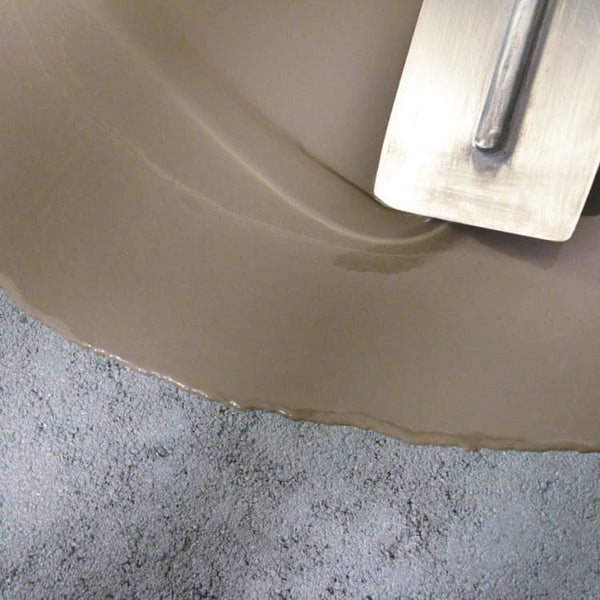
- Stucco RP. A ready-to-use, flexible paste made from polymer dispersion (a plastic binder dispersed in water). It only needs stirring before use, cannot be diluted with water, and is intended for indoor use only.
The shared properties do not apply to all six products:
- A1 fire classification (non-combustible): the five powder-based products.
- EC 1 plus (GEV-Emicode), meaning verified very low emissions: the five powder-based products.
- A+ French indoor emissions class: all six products.
- Pot life of at least 4 hours: the five powder-based products. Pot life is the length of time the mixed material remains workable, so there is no need to rush even on large surfaces.
- GreenBuilding Rating 4 or 5: all six products. This is Kerakoll's own environmental rating from 1 to 5; 5 is the best.
The manufacturer's data apply at +20 °C and 65% relative humidity. Drying takes longer in cold or humid conditions.
The six Rasobuild Eco products


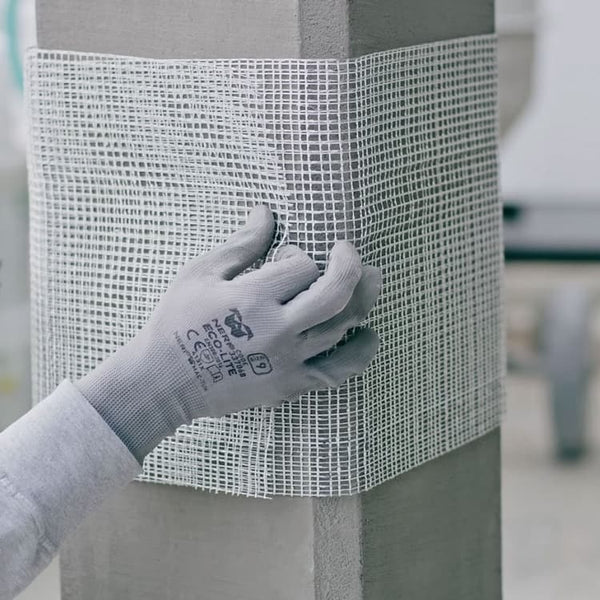
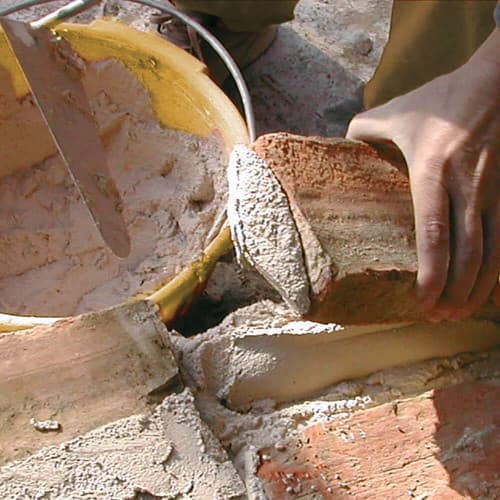
Drywall joint filling: place the joint tape between the two layers of joint filler. Flexible ready-to-use paste: Rasobuild Eco Stucco RP.


Comparison table
| Extrafino | Fino | Granello | Stucco RP | Top Fino | Top Granello | |
|---|---|---|---|---|---|---|
| Type | skim coat | finishing plaster | finishing plaster | joint filler | exterior finishing plaster | exterior finishing plaster |
| Particle size | 0–0.25 mm | 0–0.8 mm | 0–1.4 mm | 0–0.15 mm | 0–0.8 mm | 0–1.4 mm |
| Max. layer thickness | 2 mm | 5 mm | 10 mm | 0–5 mm (1–2 mm/layer) | 10 mm | 20 mm* |
| Material consumption (kg/m²/mm) | ≈ 1.1 | ≈ 1.2 | ≈ 1.3 | ≈ 1.8 | ≈ 1.3 | ≈ 1.3 |
| For painted, non-absorbent surfaces | no | no | no | no | yes | yes |
| For drywall | no | no | no | yes | After Consolidante | After Consolidante |
| Water-repellent | no | no | no | no | yes | yes |
| Where | interior and exterior | interior and exterior | interior and exterior | interior only | interior and exterior | interior and exterior |
| Compressive strength (28 days) | ≥ 3 N/mm² | ≥ 3 N/mm² | ≥ 3 N/mm² | — | ≥ 10 N/mm² | ≥ 10 N/mm² |
| Adhesion to concrete (28 days) | ≥ 0.4 N/mm² | ≥ 0.4 N/mm² | ≥ 0.4 N/mm² | ≥ 1 N/mm²** | ≥ 1 N/mm² | ≥ 1.2 N/mm² |
| Paintable | ≈ 3–7 days | ≈ 3–7 days | ≈ 3–7 days | ≈ 24 hours | ≈ 7 days | ≈ 7 days |
| Colour | white | white, grey | white | white | white, grey | white |
| Pack size | 20 kg | 25 kg | 25 kg | 5 kg bucket | 25 kg | 25 kg |
| GreenBuilding Rating | 4 | 5 (white), 4 (grey) | 5 | 4 | 5 (white), 4 (grey) | 5 |
* Value from the technical datasheet; the datasheet's exclusions also include high-thickness unevenness. ** Measured using a different test method (EN 1348), so it cannot be directly compared with the other values. All data measured at 20 °C and 65% relative humidity, according to Kerakoll technical datasheets.
More expensive? How much does it actually cost?
The bag price is misleading because the products differ in material consumption and pack size. It is worth looking at the material cost per square metre.
For comparison: an average bagged exterior cement-based skim coat costs ≈ HUF 325/kg (≈ HUF 250–390/kg), or ≈ HUF 420/m² per millimetre (source and method below, in the “Rasobuild Eco, Biocalce, Biogesso or an average market product?” section).
| Product | Price (gross) | HUF/kg | ≈ HUF/m², 2 mm layer |
|---|---|---|---|
| Rasobuild Eco Fino, grey | HUF 5,650 / 25 kg | ≈ 226 | ≈ 540 |
| Rasobuild Eco Fino, white | HUF 6,450 / 25 kg | ≈ 258 | ≈ 620 |
| Rasobuild Eco Granello | HUF 6,700 / 25 kg | ≈ 268 | ≈ 700 |
| Rasobuild Eco Extrafino | HUF 8,750 / 20 kg | ≈ 438 | ≈ 960 |
| Rasobuild Eco Top Fino, grey | HUF 13,350 / 25 kg | ≈ 534 | ≈ 1,390 |
| Rasobuild Eco Top Granello | HUF 13,900 / 25 kg | ≈ 556 | ≈ 1,450 |
| Rasobuild Eco Top Fino, white | HUF 14,700 / 25 kg | ≈ 588 | ≈ 1,530 |
| Rasobuild Eco Stucco RP | HUF 12,550 / 5 kg | ≈ 2,510 | ≈ 4,520 (at 1 mm) |
Gross prices on masterworks.hu at the time of writing (October 2026), without allowance. The current price is shown on the product page. Stucco RP is intended for joint filling, so the 1 mm value is shown for it.
Two things are clear from the table:
- Fino and Granello are not expensive. They cost approximately 17–35% less per square metre than an average bagged exterior cement-based skim coat.
- Top costs approximately 2–2.6 times as much per square metre as Fino of the same colour or Granello. It is therefore not worth buying Top for sound, unpainted, absorbent plaster: Fino or Granello is sufficient there.
The price per kilogram of Stucco RP is ≈ 2.3 times that of Biogesso Stucco mangiaVOC joint filler (HUF 5,350 / 5 kg). For filling wide joints, the Stucco RP datasheet also recommends Biogesso Stucco as the first layer, and it is cheaper per kilogram. Stucco RP is intended for hairline cracks and flexible, taped finishing joints.
Rasobuild Eco, Biocalce, Biogesso or an average market product?
Kerakoll offers two other smoothing product lines alongside Rasobuild Eco: the lime-based Biocalce and the gypsum-based Biogesso. There are also many types of bagged skim coat available on the market. Here too, the wall, not the brand, determines the choice. The table below shows the material cost by application, together with an average market product.
| Application (HUF/m², 1 mm layer) | Rasobuild Eco | Biocalce (lime) | Biogesso (gypsum) | Average market product |
|---|---|---|---|---|
| Smoothing plastered walls, fine grain | Fino ≈ 270 (grey) / 310 (white) | Intonachino Fino ≈ 550 | — | exterior cement skim coat ≈ 420 (350–470) |
| Smoothing a plastered wall, medium grain | Granello ≈ 350 | Intonachino Granello ≈ 510 | — | exterior cement skim coat ≈ 420 (350–470) |
| Extra-fine finishing layer | Extrafino ≈ 480 (interiors and exteriors) | Intonachino Tipo “00” ≈ 465 | Rasa&Decora ≈ 580 (interiors) | interior gypsum skim coat ≈ 300 (270–340), interiors only |
| Plasterboard joints, cracks (HUF/kg) | Stucco RP ≈ 2 510 | — | Stucco mangiaVOC ≈ 1 070 | powder joint filler ≈ 640 (340–910); ready-mixed paste ≈ 530 (520–550) |
| Painted façade, without replastering | Top Fino ≈ 690–760; Top Granello ≈ 720 | not suitable for old paint | interior product | renovating skim coat ≈ 790 (1 product)* |
Kerakoll prices: gross prices from masterworks.hu; material consumption according to Kerakoll technical data sheets (October 2026). Average market product: the average of products from common brands available in Hungary, 1–4 products per category, based on the lowest webshop price found (e.g. ÁrGép, exterior skim coat) and material consumption stated in the manufacturer's technical data sheet (for two products, as provided by the distributor), October 2, 2026. Shelf prices in DIY stores may be 10–25% higher. For joint fillers, the price per kilogram is shown because manufacturers do not specify joint filling by millimetre. * We found only one specifically formulated renovating façade skim coat that can be applied to painted surfaces. Mesh-reinforced adhesive and bedding mortars that can also be applied to painted surfaces cost approximately HUF 310–620/m² per mm, but they are applied in a thicker layer with mesh, so they cannot be compared directly.
What does the table show?
- Biocalce is intended for breathable lime plaster systems. It is made from pure natural hydraulic lime, NHL 3.5, without cement, and according to the technical data sheet, has high breathability. Rasobuild Eco base skim coats also contain lime and marble powder, but their technical data sheets do not specify breathability. Intonachino Fino and Granello naturally inhibit the growth of fungi and bacteria (B+ and F+ classifications). Intonachino Fino and Granello cost approximately 1.5–2 times as much per square metre as Rasobuild Eco Fino and Granello, respectively; Tipo “00” is priced close to Extrafino. Neither is suitable for old painted surfaces. Details in the lime plaster guide.
- Biogesso is intended for interiors when air quality matters. According to the manufacturer, it absorbs indoor formaldehyde (without painting or beneath breathable Kerakoll decoration) and releases 90% less dust during mixing than conventional products. Rasa&Decora provides a finished decorative wall even without painting. Not suitable for exteriors. Details in the article Which should you choose: skim coat or plasterboard joint filler?.
- Extra-fine finishing layer: indoors, gypsum skim coat is the cheapest option, but it is not suitable outdoors. Extrafino is suitable for both indoor and outdoor use; on lime plaster, Tipo „00” provides a breathable surface at a similar price.
- Joint filler: Stucco RP costs ≈ 4–5 times as much per kilogram as an average joint filler on the market. It is worthwhile only where flexibility is needed: for hairline cracks and taped finishing of joints. For filling joints, Biogesso Stucco or a conventional joint filler is more economical.
- Painted façade: among the products specifically marketed as renovation skim coats found on the market, Top Fino and Top Granello are at a similar price level. Mesh-reinforced basecoat mortars are cheaper per square metre, but are applied in a thicker layer with mesh.
When is Top worthwhile? Painted façade: skimming or replastering
Top is relevant where Fino and Granello cannot be used: on painted, non-absorbent façades. Here, the real alternative is removing the old plaster and applying new plaster. Example for a 100 m² façade with worn but sound paint, calculated with an average 3 mm skim coat (assumption):
| Item (100 m²) | Cost |
|---|---|
| Rasobuild Eco Top Fino, grey, 3 mm — material (16 bags) | ≈ 214 000 Ft |
| Rasobuild Eco Top Granello, 3 mm — material (16 bags) | ≈ 222 000 Ft |
| Rasobuild Eco Top Fino, white, 3 mm — material (16 bags) | ≈ 235 000 Ft |
| Removing the old plaster — labour only (average ≈ 3 200 Ft/m², range 850–4 500) | ≈ 320 000 Ft (85 000–450 000) |
| New plastering — labour only (typically 3 250–6 000 Ft/m²) | ≈ 325 000–600 000 Ft |
Labour costs: JóSzaki, plaster removal prices 2026 and JóSzaki, plastering prices 2026 (the plastering price includes VAT). The labour cost of skimming and painting arises with both options, so the table shows only the main differing items. With the Top option, high-pressure washing, removal of loose areas and, if necessary, mesh are added.

Sound façade with well-adhered paint: Top restores it without removing the skim coat or replastering.
At average rates, the labour cost of removing the old plaster alone is already higher than the total material cost of Top. On top of this come the materials and application of the new plaster, removal of rubble and a longer scaffolding period. If the façade is sound, Top provides a flat, paintable, water-repellent surface at much lower average cost, without demolition, rubble removal or new plaster.
The cost of the risk
The most expensive option is the wrong choice of skim coat. If applied over loose paint, it will come off together with the paint, and the work — including materials, labour and scaffolding — must be started from scratch. That is why, on painted façades, the adhesive-tape test and removal of loose areas cannot be skipped.
In brief
- Sound, unpainted plaster with minor imperfections: Fino — the lowest cost per square metre.
- Sound plaster, deeper imperfections: Granello — up to 10 mm, in fewer coats.
- Extra-smooth, white finishing layer: Extrafino — more expensive per kilogram, but only a thin layer is needed.
- Painted or non-absorbent façade: Top Fino or Top Granello — a more expensive material, but at average prices it is much cheaper than replastering.
- Drywall joint, hairline crack: Stucco RP — expensive per kilogram, but only a small amount is needed.
Which Rasobuild Eco do you need? Decide based on the wall
Start with the wall, not the product. If you are unsure, carry out the simple tests above.
- Unpainted, sound plaster with imperfections of up to 5 mm: Rasobuild Eco Fino.
- Unpainted, sound plaster with deeper imperfections of up to 10 mm: Rasobuild Eco Granello.
- For an already smooth wall where the goal is an extra-smooth, white surface before painting: Rasobuild Eco Extrafino.
- Mixed substrate, such as plaster and concrete on one wall: first apply Fino with Rinforzo V 50 mesh, then Extrafino.
- Painted wall or façade, well-adhered glass mosaic, fixed plastic covering, concrete: Rasobuild Eco Top Fino for a fine-grained surface, Rasobuild Eco Top Granello for a medium-grained surface — provided the paint does not come off in the adhesive-tape test and the surface has not been treated with a water repellent.
- Drywall joint, hairline crack, wood: Rasobuild Eco Stucco RP; for a wide joint, first use Biogesso Stucco mangiaVOC.
- Dusty, crumbling plaster or gypsum plaster: first apply Rasobuild Eco Consolidante, then choose the appropriate finishing product from the list above.
- Breathable lime plaster system: Biocalce finishing products are suitable for it; we wrote about this in the lime plaster guide.
You can read about full-surface smoothing of drywall walls in the article Filler or drywall joint compound? All products: Finishing plaster · Filler and fine finishing compound.
Frequently asked questions
What is the difference between filler and finishing plaster?
Filler is a thin, extra-fine finishing layer for an already smooth wall: Rasobuild Eco Extrafino can be applied up to 2 mm thick. Finishing plaster has a coarser grain, can be applied more thickly, and levels out plaster unevenness: Fino up to 5 mm and Granello up to 10 mm.
How much filler or finishing plaster is needed per m²?
For powder-based Rasobuild Eco products, allow approximately 1.1-1.3 kg/m² per millimetre. One 25 kg bag of Fino covers approximately 20 m² at 1 mm and 10 m² at 2 mm. Stucco RP joint filler requires approximately 1.8 kg/m² per millimetre.
Can façade filler be applied over old paint without replastering?
Yes: Rasobuild Eco Top Fino and Top Granello can be applied to well-bonded, solid old paint without replastering, provided it is not redissolved by water. Loose areas must be removed, the surface must be cleaned with a pressure washer, and it must be allowed to dry completely. They are not suitable for surfaces treated with a water repellent.
How long before the filled wall can be painted?
At +20 °C and 65% relative humidity, Extrafino, Fino and Granello take approximately 3-7 days, Top Fino and Top Granello approximately 7 days, and Stucco RP approximately 24 hours to dry. It takes longer in cold or humid conditions.
Which filler or joint filler is suitable for plasterboard?
For hairline cracks and flexible taped jointing, use Rasobuild Eco Stucco RP; for wide joints, first use Biogesso Stucco mangiaVOC. Extrafino, Fino and Granello are not suitable for plasterboard. Top Fino and Top Granello can be applied after priming with Rasobuild Eco Consolidante.
Can the filler also be used outdoors, on façades?
Yes: Rasobuild Eco Extrafino, Fino, Granello, Top Fino and Top Granello fillers and skim coats can be used both indoors and outdoors, while Stucco RP joint filler is for interior use only. None of them should be applied to sun-exposed surfaces or in windy weather.
Is a primer needed under the filler or skim coat?
No, not on sound, solid, absorbent plaster - wetting is sufficient. On crumbling or gypsum-based walls, apply Rasobuild Eco Consolidante first. New plaster must be scratched before skim coating.
Do I need a lime-based, gypsum or general-purpose filler: Biocalce, Biogesso or Rasobuild Eco?
Biocalce Intonachino lime skim coat is suitable for breathable lime plaster. For interior walls, if air quality or an unpainted feature wall is important, choose Biogesso gypsum filler. For general plaster, concrete and façades, use Rasobuild Eco filler and skim coat; for painted surfaces, use the Top version.
Can the filler be applied as a DIY project?
DIY application is not recommended: according to the manufacturer, Rasobuild Eco fillers and skim coats are intended for professionals. Achieving a flat, even wall, even in raking light, requires experience with a finishing trowel; on façades, scaffolding and a pressure washer are also needed. We also carry out skim coating and painting.
We help you choose
Not sure which one is right for your wall? Tell us about the wall - whether it is painted or unpainted, indoors or outdoors, and how large the imperfections are - and we will recommend a suitable system. You can also request a package quote for materials and labour: we also carry out skimming, façade renovation and painting.
hello@masterworks.hu · +36 70 400 2040
Masterworks - the official Kerakoll distributor in Hungary.