

Damp, saltpetre-affected wall? Breathable plaster or wall drying system
Owners of old houses, architects, and contractors repeatedly face the same problem: walls get damp, plaster bubbles and peels off, the characteristic white efflorescence of nitrate-affected walls appears, mold breaks out in corners, and no matter what paint is applied, everything starts over again after a few years. The most common cause is not a “bad wall” but poor material choice — specifically cement and plastic-based systems where the wall should be drying.
The Kerakoll Biocalce line — natural hydraulic lime class NHL 3.5 according to EN 459-1 standard — targets exactly this problem. This article clarifies two things that most descriptions confuse: what breathable lime plaster alone is for, and what a separate wall drying (renovation) system is, which is needed for actively damp, salty walls.
In short — what each needs:
- Intact but old or heritage wall, with the right material: breathable lime plaster (Biocalce Intonaco + fine smoothing + breathable paint).
- Actively damp, water-penetrated, salty, nitrate-affected wall: WTA-certified wall drying (renovation) system (Rinzaffo → Zoccolatura salt-removing plaster → smoothing → breathable paint).
- Wet and cold, moldy wall: thermal insulation bio-renovation plaster (Benesserebio) is also an option.
- Intact, dry, modern wall, only appearance matters: a breathable lime or silicate paint is enough — don’t pay for a full system.
What is natural hydraulic lime (NHL)?
The raw material of Biocalce is pure marl limestone, traditionally burned in vertical kilns at about 800–1000 °C — much lower temperature than Portland cement clinker. During burning (calcination), no clay or other modifying materials are added: the natural hydraulic properties come from the purity of the raw material itself.

The result is a binder that hardens in two ways: partly by reacting with water (hydraulic setting), and partly over time by absorbing carbon dioxide from the air, carbonating. The latter means that the wall gradually strengthens over years — it doesn’t just “set” at a single point and then only age. Only hydraulic lime that meets the requirements of EN 459-1 can be called “natural” (NHL) — this is not a marketing label but a community-level verified technical classification.
The real strength: the wall can dry
If we had to highlight one property of lime plaster, it would be vapor permeability and moisture buffering. The Biocalce Intonaco has a vapor diffusion resistance significantly lower than cement (μ ≈ 6 compared to cement’s μ ≈ 20). In other words: water vapor passes through it much more easily. Since lime is also hygroscopic — it absorbs and releases moisture from the air — vapor passes through the wall, evaporates outward, and the surface stays dry. Cement, on the other hand, blocks moisture: the wall cannot dry, moisture remains trapped, leading to plaster detachment, salt efflorescence, and mold.
An important clarification to make the picture accurate: lime handles moisture, not chemical pollutants in the air. Refreshing indoor air, removing CO₂ and volatile compounds is the task of ventilation, not plaster — the two work together, not instead of each other. That’s why we don’t promise a “wall that cleans the air”; we promise what truly happens: a drying-capable, healthy, durable wall structure.
Mold and moisture — prevention, not chemicals
The drier surface and the natural alkalinity of lime create an environment where mold finds it harder to settle. This is not a disinfectant effect but the elimination of conditions. The Biocalce surface also inhibits bacterial and fungal growth, as confirmed by independent third-party tests according to ISO 846 (methods A, B, C).
Why lime resists salt that cement fails against
Wet masonry brings dissolved salts to the surface; as the water evaporates, the salts crystallize, and the crystallization pressure breaks the plaster apart — hence the flaking, powdery surface. The so-called Anstett test measures this: the combination of lime and pozzolan expands less than 0.8%, while Portland cement expands about 40% in the same test. The difference is because natural lime has very low reactive aluminate (C₃A) content, so it does not form the expansive salt (ettringite) typical of cement, and the pozzolanic reaction binds the free lime. The key is the measured result: lime remains intact where cement would crack.

Two different tasks: breathable plaster ≠ wall drying
Here we separate what most descriptions confuse.
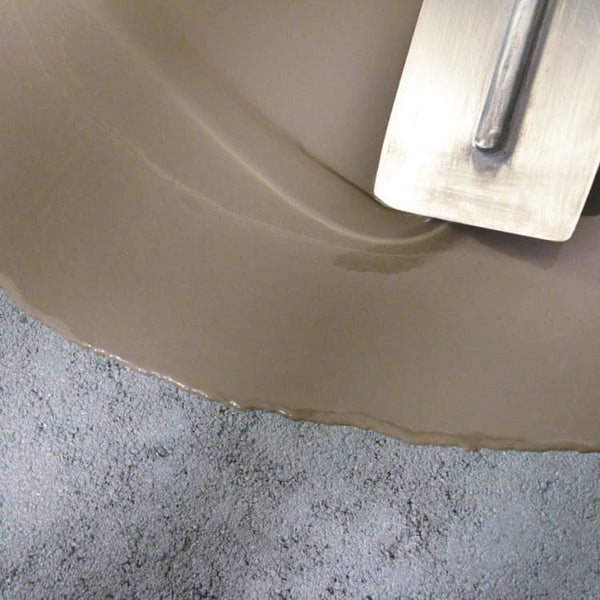
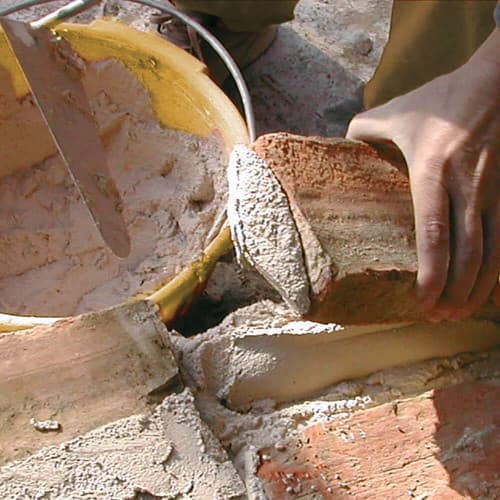
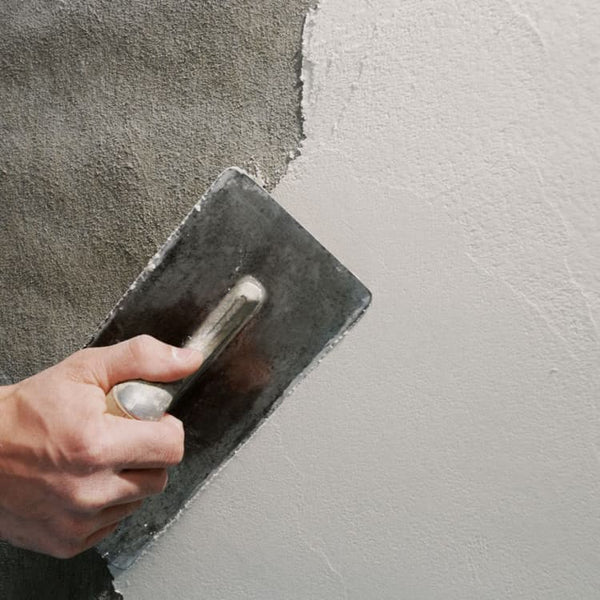
1. Breathable lime plaster — prevention and compatibility. This is the classic role: vapor-permeable, compatible with old masonry, reversible plaster, finished with beautiful mineral surfaces. It is the right choice if the wall is basically sound and you just want to plaster it with the appropriate material — in monument restoration, breathable new construction, or refined interiors. Layer order: Biocalce Rinzaffo (bonding bridge) → Biocalce Intonaco (base plaster) → Biocalce Intonachino Fino (smoothing) → breathable paint or decorative finish.
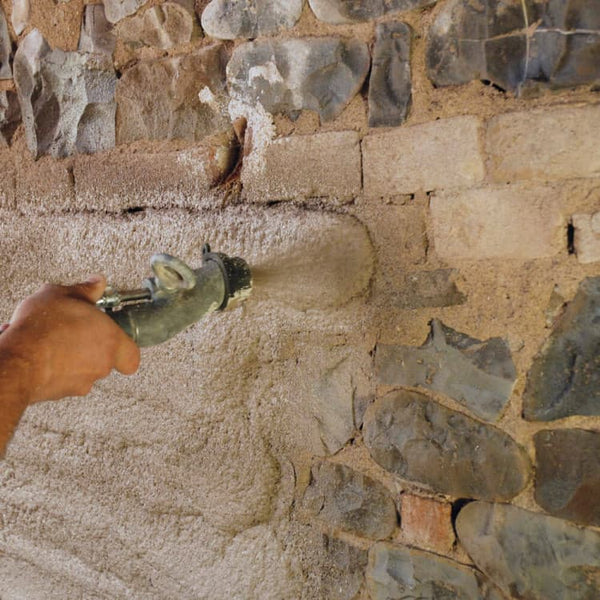
2. Wall drying (remediation) system — treatment of the already damp, salty wall. This is not a simple plaster but a targeted, WTA-certified remediation plaster system (commonly called aerated or moisture-removing plaster) for walls with active soil moisture and salt load — the typical case of damp, saltpetre-affected walls. The key is the Biocalce Zoccolatura salt-remediation plaster: a renovation plaster with a large pore volume (≥ 40%), highly breathable (μ ≤ 3), which stores crystallizing salts in its pores beneath the visible surface and allows moisture to evaporate over a large area. Beneath it, Rinzaffo is not the "breathable" layer but the bonding bridge, whose special task is to prevent salts from entering the fresh plaster. The structure:
- Masonry — the existing, damp, salty wall
- Biocalce Rinzaffo — bonding bridge and salt barrier
- Biocalce Zoccolatura — salt-remediation plaster: binds salt in its pores, evaporates over a large surface area (μ ≤ 3)
- Biocalce Intonachino — fine smoothing
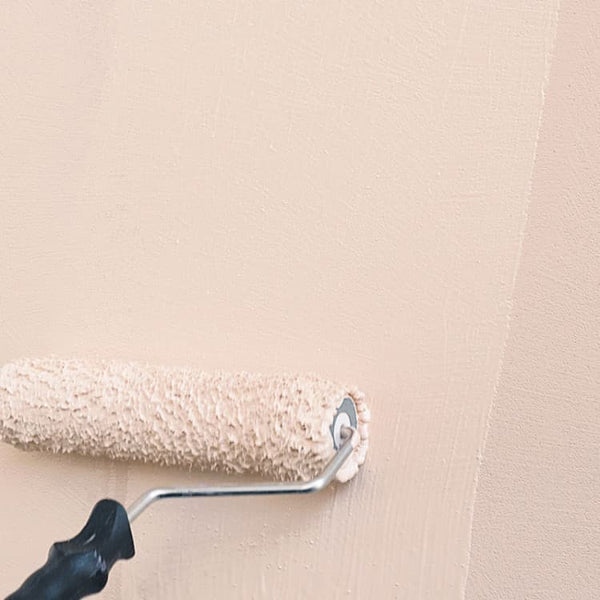
- Breathable paint — lime or silicate paint

The important honesty: WTA remediation plaster is an accepted solution on its own for rising damp — it keeps the surface dry as long as evaporation exceeds capillary moisture replenishment, and it does so permanently. A subsequent waterproofing (wall insulation, e.g., injection or sheet) complements this but is not a prerequisite for its function. What is important to clarify on site: where the water comes from and how high it rises — this determines the thickness and height of the layer. We are happy to assess this.
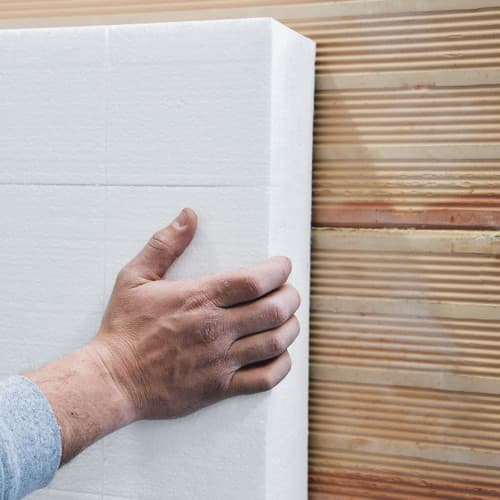
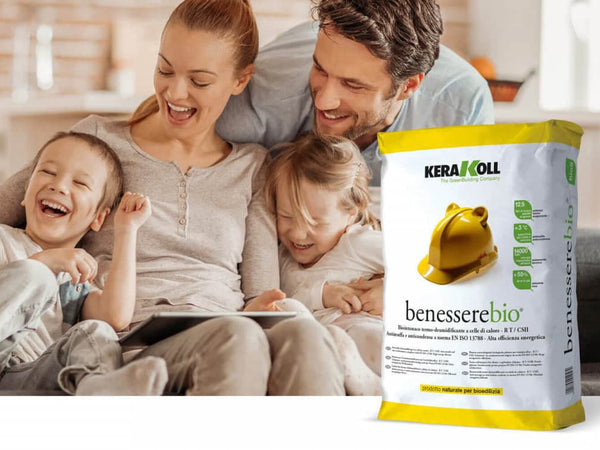
If the wall is not only damp but also cold and moldy (thermal bridge, condensing moisture), then the thermal insulation Benesserebio restorative bio-plaster is also an option: it provides a warmer wall surface and saves energy. The full moisture management range is in the Moisture Management category.
Old and moving walls: compatibility and reversibility
Lime is a soft, "sacrificial" material: it can be removed from historic brick or stone without damage. This is the principle of monument protection, which heritage authorities accept. In contrast, cement-, polymer-, or epoxy resin-based systems are often incompatible with old substrates and damage the wall itself upon removal.
Lime is also flexible: due to its low modulus of elasticity and small shrinkage, it follows movement as fine hairline cracks rather than large, ugly cracks. Free lime re-carbonates over time and partially "welds" these hairline cracks. This is a significant advantage for moving buildings — settling, clay soil, slopes, wooden structures. However, it is important: lime tolerates small movements but is not a structural repair. It does not fix structural defects.
The system rule — where most fail
Moisture permeability is a property of the entire wall, connected in series. Moisture passes through every layer, and the least permeable layer determines the whole wall. A single dense layer anywhere — plastic paint, vapor barrier foil, foam, dense cement plaster — neutralizes all the benefits of lime.
GOOD: every layer breathes → moisture escapes, the wall dries.
BAD: a single dense plastic paint layer → moisture gets trapped inside the entire wall.
Here are some rules carved in stone. Never paint with acrylic or plastic paint: the finishing layer should be whitewash, silicate, or mineral paint. The exterior side should be at least as open as the interior so that the wall can always dry outward — a breathable interior plus a dense exterior plaster creates a moisture trap that fills from the inside.
The aesthetics that plastic paint cannot imitate
Lime is not only a function but also a surface. Limewashing and lime-based decorative plasters—the Biocalce Marmorino and Biocalce Spatolato, as well as tadelakt-style polished surfaces—are genuine mineral coatings: with depth, soft matte shine, hand-crafted tonal play, and stone-like texture. This living, natural appearance cannot be imitated by plastic wall paint—hence their use in high-prestige interior design projects. If you want “just” a painted, breathable surface, the Biocalce Tinteggio lime paint or the Biocalce Silicato Puro Pittura silicate paint are suitable. Indoors, the breathable, extra matte Absolute Paint is also an excellent choice to finish lime and restorative plaster systems—in the Color Collection 150 colors.
Which system for which wall?
- Old, damp or salty, nitrate-affected masonry: wall drying system—Rinzaffo bonding bridge → Zoccolatura salt-removing plaster → fine smoothing → breathable paint. On-site survey is essential beforehand.
- Damp and cold, moldy wall (thermal bridge): thermal insulation Benesserebio restorative bio-plaster.
- Monument or old but fundamentally sound wall (restoration): breathable lime plaster system from Biocalce Muratura / Biocalce Pietra masonry and joint mortars to Biocalce Intonaco plaster and fine smoothing.
- Breathable new construction (wood structure, natural insulation): fully vapor-open system—Natural systems.
- Refined interior, genuine mineral surface: Spatolato or Marmorino.
- Sound, dry, modern wall, only the lime-painted look needed: a breathable silicate or lime paint is enough—don’t pay for a full lime plaster system.
Where it is not truly needed—let’s be honest
This section rarely appears in brochures, yet it is what builds trust. In a sound, dry, modern apartment or house—with effective damp-proofing and proper ventilation—there are no conditions that make lime valuable; replacing lime with cement here does not significantly affect health. In traditional new construction walls (concrete block + vapor barrier + foam + plaster), applying lime on top is purely cosmetic because the moisture path is already sealed above. And if you only want the lime-painted look on a solid wall, silicate paint achieves the same matte effect more cheaply—though for smoothed, polished stucco surfaces, the lime material itself is necessary.
Certified quality, not slogans
Biocalce is backed by verifiable certifications: EN 459-1 (NHL 3.5) CE-marked natural hydraulic lime; ISO 846 (A/B/C) independent bacteria and mold growth inhibition certification; EC1 Plus-GEV, the strictest emission class; and WTA 2-2-91/D certification for the sanitation system, a recognized quality mark for wall drying. Detailed technical data sheets and declarations of performance are downloadable on every product page (example: Biocalce Intonaco technical data sheet). The full Biocalce range and certifications summary brochure in Hungarian is downloadable here: Biocalce brochure (PDF).
Frequently Asked Questions
What is a saltpeter wall, and why does the plaster blister and crumble on it?
Saltpeter walls are caused by rising moisture: water brings dissolved salt into the wall, and the salt crystallizes, expanding and breaking off the plaster (hence the white efflorescence, blistering, and peeling surface). Salt-resistant, breathable sanitation plaster (e.g., Biocalce Zoccolatura) removes the salt and moisture without sealing it in — thus the wall dries and the plaster remains.
Can lime be used instead of cement on all walls?
Not always worth it. On intact, dry, well-ventilated modern walls, lime offers no significant advantage. However, for truly old, damp, salty, or moving walls, as well as monuments, lime is the right material.
Does lime plaster eliminate dampness?
Breathable plaster allows the wall to dry, but active rising moisture requires a special wall drying (sanitation) system. That targeted system provides a lasting solution by evaporation and salt binding; the water source (e.g., missing insulation) should be treated alongside it, but not necessarily before.
Can lime plaster be painted with regular wall paint?
Not recommended. Plastic/acrylic paint seals the wall and kills exactly the permeability. Use breathable lime, silicate, or mineral paint (e.g., Biocalce Tinteggio, Silicato Puro Pittura, or Absolute Paint indoors).
Which is needed for wall drying, Zoccolatura or Benesserebio?
For pure salt damage, use Zoccolatura salt-resistant plaster. If the wall is cold and moldy (thermal bridge, energy loss), the insulated Benesserebio is the better choice. In uncertain cases, an on-site survey decides.
Biocalce products mentioned in the article — what each is for
- Biocalce Muratura / Biocalce Pietra — masonry and jointing mortar for old and exposed masonry.
- Biocalce Rinzaffo — bonding bridge / base plaster; also salt barrier in the wall drying system.
- Biocalce Intonaco — breathable base plaster (classic lime plaster).
- Biocalce Zoccolatura — salt-removing (air-porous) plaster for damp, saltpeter walls and plinths.
- Benesserebio — thermal cell bio-plaster for renovating damp and cold, moldy walls.
- Biocalce Intonachino Fino — fine smoothing plaster for a smooth, paintable surface.
- Biocalce Tinteggio (lime paint) / Biocalce Silicato Puro Pittura (silicate paint) — breathable finishing paint.
- Absolute Paint — breathable, extra matte interior wall paint in 150 colors from the Color Collection.
- Biocalce Marmorino / Biocalce Spatolato — decorative plaster, genuine mineral noble finish for sophisticated interiors.
The full range is available in the Kerakoll Biocalce collection, and the detailed Biocalce brochure in Hungarian (PDF) can be downloaded here.
Not sure what you need? The cause of a damp wall can often only be determined on site. Request a free on-site survey and material + labor cost estimate at hello@masterworks.hu or by calling +36 70 400 2040 — we will tell you whether breathable plaster is enough or if a wall drying system is needed, and exactly which Biocalce products are suitable for your wall.