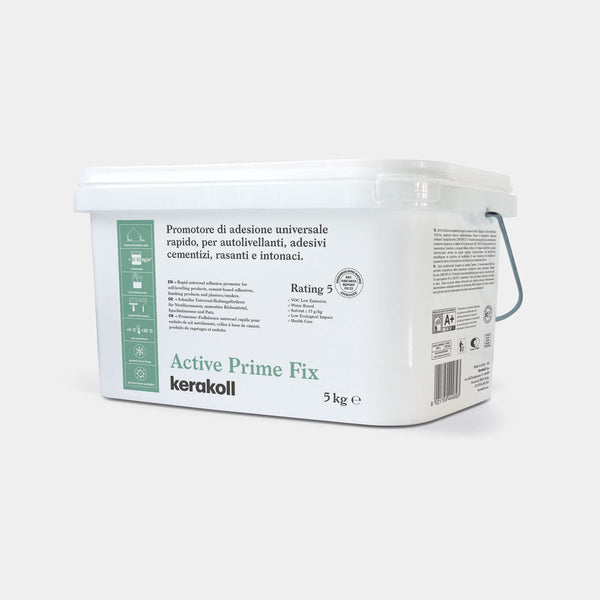
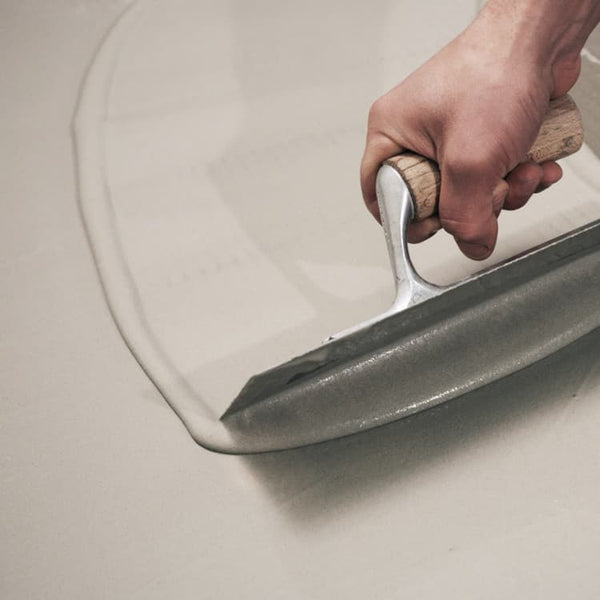
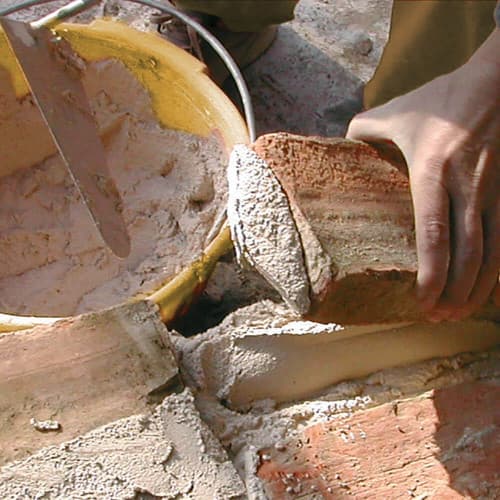
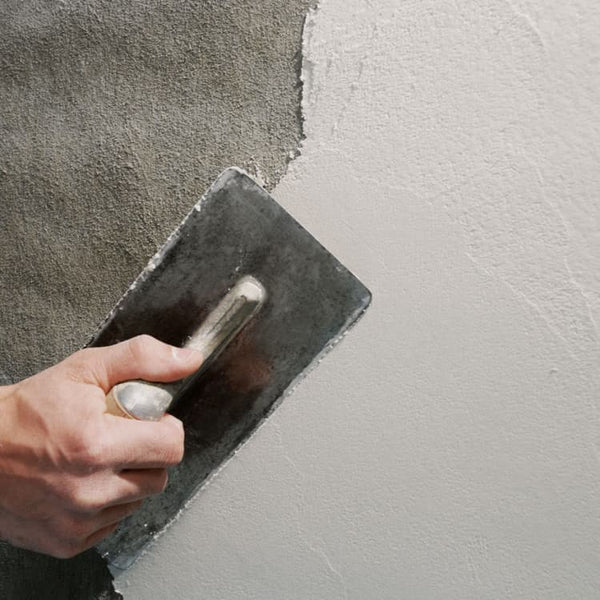
Is the self-levelling compound coming off old tiles, gypsum or wood? The levelling compound cannot grip a smooth, non-absorbent surface. On gypsum and anhydrite, the cement-based material reacts and expands. The adhesion-promoting film adheres to all three substrates. On glazed tiles, it provides a pull-off strength of ≥ 2.0 N/mm² after 24 hours. This is Kerakoll Active Prime Fix.
-
Old tile, stone, wood, rigid PVC, epoxy beneath the levelling compound: adheres even to non-absorbent substrates — on glazed tiles, pull-off strength is ≥ 2.0 N/mm² after 24 hours and ≥ 2.5 N/mm² after 7 days
-
Part of the system: beneath self-levelling compounds (Keralevel Eco, Planogel Ultra), cement-based tile adhesives (H40 Gel), skim coats and plasters — the first layer on floors and walls
-
Gypsum and anhydrite screed indoors: forms a separating layer — neutralises the expansive reaction of cement-based material on the gypsum-based substrate
-
Thin self-levelling compound on a porous substrate: reduces and regulates absorbency — draws less water from the compound, allowing the levelling compound to remain workable for longer
-
Dusty, highly porous substrate: diluted up to 1:4, it also binds surface dust — the substrate must still be sound, and cement laitance must be ground off first
-
Tight schedule: dries quickly — once the film has cured (at +23 °C ≈ 30–60 minutes), the next layer can be applied, within 48 hours at the latest
-
Occupied home, school, office: EC 1 plus, M1 and A+ emission classifications — water-based primer with very low VOC emissions
-
Not a finished surface on its own: bonding primer — apply self-levelling compound, adhesive, skim coat or plaster over it; version with a quartz top layer for smooth substrates: Active Prime Grip
| Type |
Deep primer / surface hardener · adhesion-promoting primer for walls and floors (interior and exterior) |
| Composition |
One-component, water-based blue liquid · ready to use |
| Performance |
Pull-off strength on glazed tiles ≥ 2.0 N/mm² (24 hours) · EC 1 plus · M1 · A+ |
| Material consumption |
≈ 0.1–0.2 kg/m²
1 kg ≈ 5–10 m²
5 kg ≈ 25–50 m²
25 kg ≈ 125–250 m² |
| Packaging |
1 kg bottle · 5 kg bucket · 25 kg canister |
| Storage |
12 months |
What is it suitable for?
Substrates (absorbent and non-absorbent): Ceramic floor and wall coverings, thin stone slabs, natural stone; power-trowelled concrete floors; compact, non-dusting cement and anhydrite screeds; prefabricated and cast-in-place concrete; wood flooring and parquet; brick-gypsum panels and plasterboard; rigid metal substrates; floors with synthetic-resin adhesive residues, epoxy floors, lacquer, rigid PVC.
Suitable subsequent layers: Self-levelling and levelling compounds; mineral and cement-based adhesives; cement- and gypsum-based smoothing compounds and plasters; liquid mortars; Bioscud waterproofing products.
Areas: Indoors and outdoors, walls and floors — homes, offices, shops, renovations.
Not suitable for:
- As a standalone surface (without self-levelling compound, adhesive or smoothing compound)
- On highly flexible substrates subject to significant dimensional changes or thermal expansion
- On damp substrates or substrates prone to moisture ingress
- Under semi-dry or coarse-grained mortar, plaster or screed
- On cement slurry-coated (bleeding) surfaces without grinding; on magnesite substrates
- For rough substrates or under products applied in thick layers
The system in which it is used
Active Prime Fix is the first layer of floor and wall systems. Levelling comes next, followed by the covering.
Which primer is needed? — Deep primers and surface consolidators
| Task |
Product |
What goes on it |
| Under self-levelling compound, levelling compound and tile adhesive — on absorbent and non-absorbent substrates (old tiles, stone, wood, gypsum, anhydrite) |
Active Prime Fix — this product |
Self-levelling compound, levelling compound, cement-based adhesive, smoothing compound |
| Absorbent, dusty cement screed or cement plaster before tiling |
Keradur Eco |
Tile adhesive; parquet and resilient flooring adhesive; Active Prime Fix is recommended first under levelling compound |
| Under mortar, plaster, concrete repair mortar; between old and new concrete |
Primer Uni |
Mineral mortar, cement- and gypsum-based plaster, smoothing compound |
| Old, crumbling wall plaster before skimming; plasterboard |
Rasobuild Eco Consolidante |
Cement-, lime- and gypsum-based smoothing compound and plaster |
| Chalky, crumbling wall before painting |
Universal Wall Primer |
Paint, enamel paint, decorative coating |
| Under silicate paint or silicate decorative coating |
Biocalce Silicato Consolidante |
Silicate paint, silicate decorative coating |
Frequently asked questions
Why does self-levelling compound detach from old tiles?
Because glazed tile does not absorb, the levelling compound cannot grip it. A bonding primer is required that also forms a film on non-absorbent surfaces. On glazed tile, Active Prime Fix provides a pull-off strength of ≥ 2.0 N/mm² after 24 hours.
What primer is needed under self-levelling compound?
Use one that adheres to both absorbent and non-absorbent substrates and regulates absorbency. This is especially important with thin self-levelling compounds. This type of primer is required under Keralevel Eco and Planogel Ultra on gypsum, anhydrite and concrete substrates.
Is primer required for gypsum or anhydrite screed?
Yes. Cement-based material triggers an expansive reaction in gypsum, and the primer separates the two. The surface must be sanded and vacuumed; residual moisture must be ≤ 0.5% for anhydrite and ≤ 1% for gypsum plaster.
Does the primer need to be diluted?
Not on non-absorbent surfaces, but yes on porous and gypsum substrates. On dense, low-absorbency substrates, use undiluted or at a ratio of 1:2 (primer : water). On very porous, dusty substrates, use at most 1:4; on gypsum and anhydrite, first use at most 1:3, followed by an undiluted coat.
How long before the self-levelling compound can be applied?
≈ 30–60 minutes later, once the film has fully set (+23 °C, 50% humidity). The next layer must be applied within 48 hours. It takes longer in cold and humid conditions.
Active Prime Fix or Keradur Eco?
Active Prime Fix is a bonding primer: it can also be used on non-absorbent substrates, at 0.1–0.2 kg/m². Keradur Eco is a deep primer only for absorbent cement-based substrates (screed, plaster), at 0.5–2 kg/m². After Keradur Eco, Active Prime Fix is recommended before applying levelling or smoothing compound.
How much primer is needed per m²?
≈ 0.1–0.2 kg/m² in one coat. A 5 kg bucket is enough for ≈ 25–50 m². Two coats are required on gypsum substrates.
When should I not use it?
On damp, moisture-affected, heavily deforming or magnesite substrates. It is also unsuitable under semi-dry or coarse-grained mortar and screed. Not recommended for rough substrates or under thick layers.
Can it be purchased separately?
Yes. Even if you already have the levelling compound or adhesive, if you are priming only one room, or if the quantity proves insufficient.
Can I apply it myself?
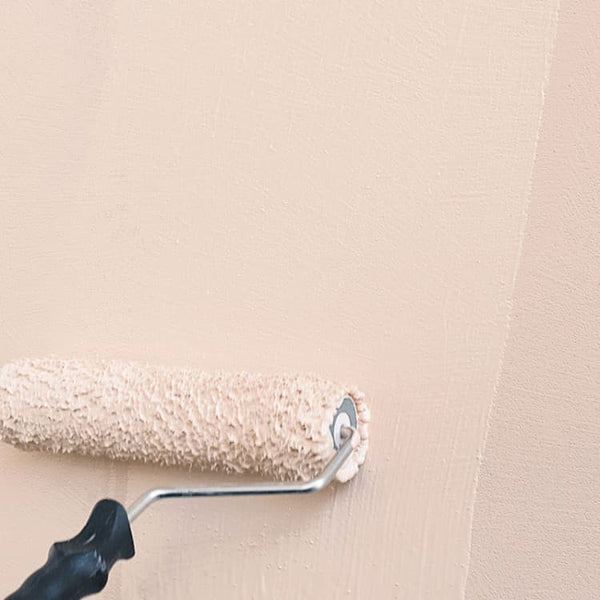
The product is designed for professionals, but application is simple: use a roller or brush, in two directions, crosswise. Preparing the substrate — sanding, removing dust, measuring moisture — is the more difficult part. We also undertake complete floor installation.