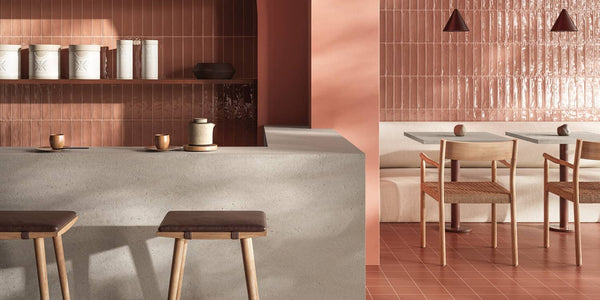
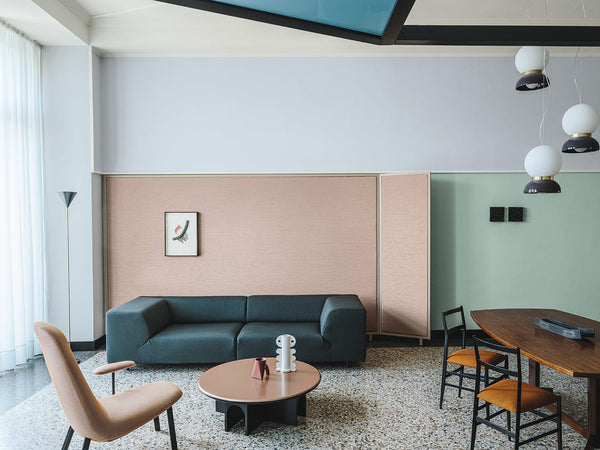
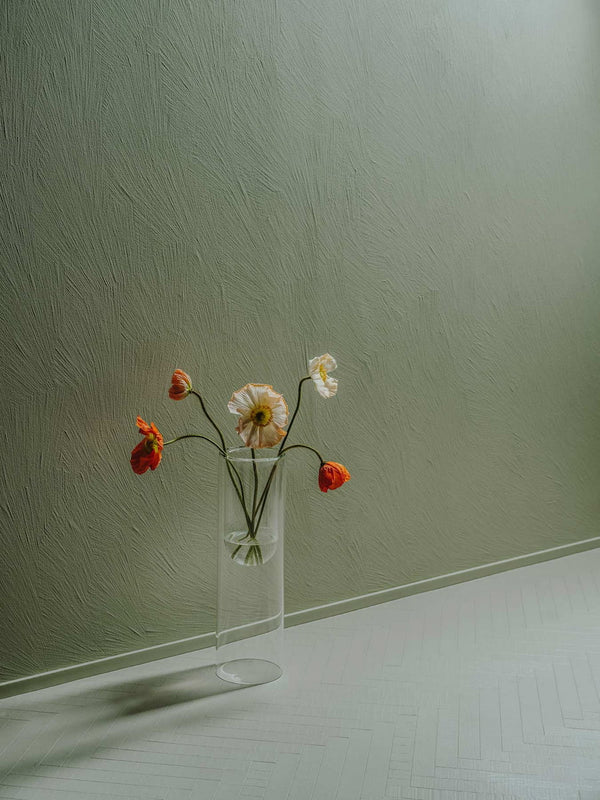
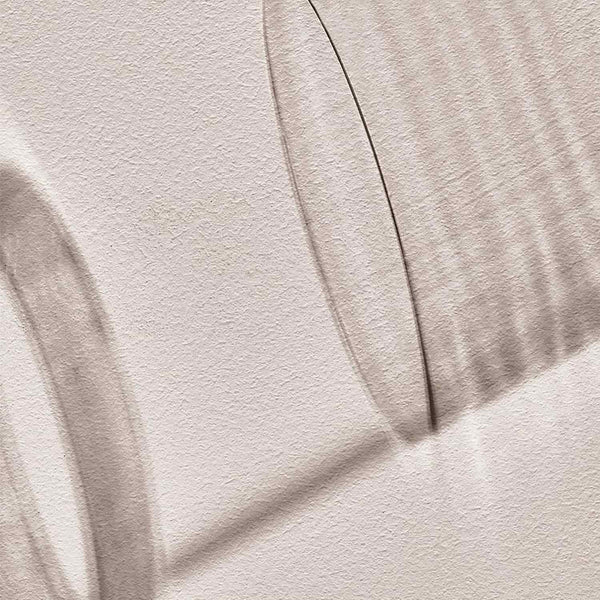
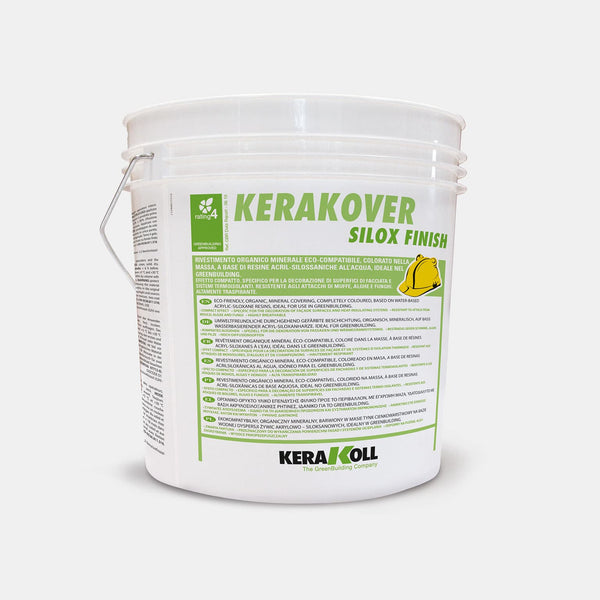
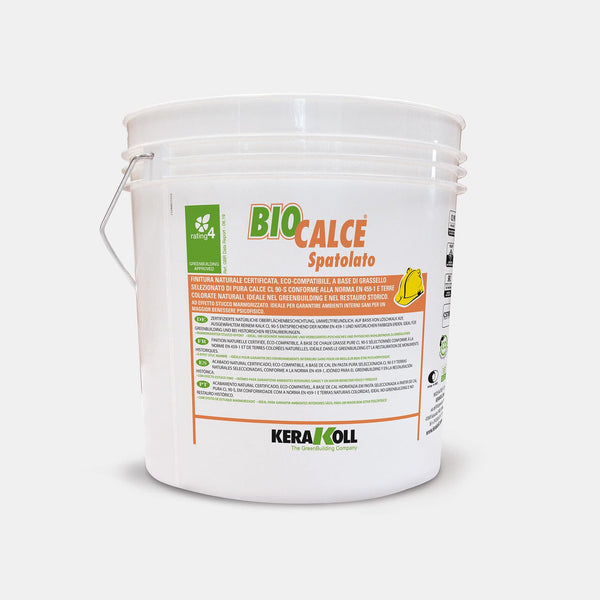
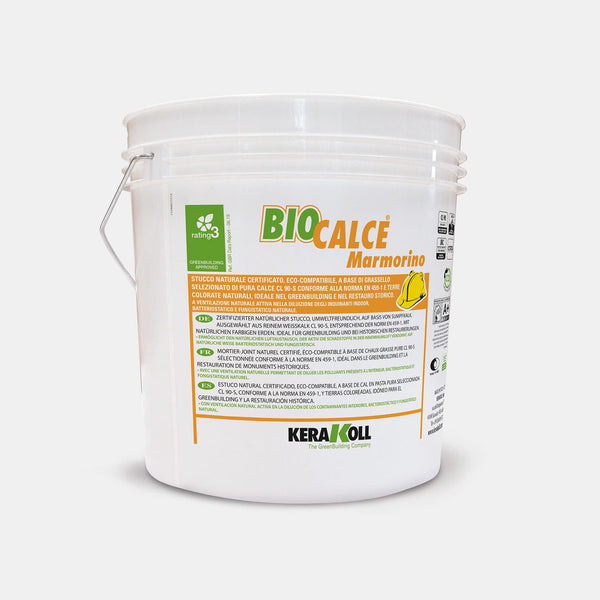
Lélegző mészvakolattal felújított mediterrán nappali: meszelt boltíves mennyezet, natúr látszó kőfal és Kerakoll Biocalce természetes mész falfelület

The complete breathable lime system — layer by layer

Kerakoll BioCalce & GeoCalce: from masonry to painting, in a single vapour-permeable system. WTA 2-2-91/D — the entire plastering system is certified, not just one product.


A damp, salt-contaminated or simply poorly plastered wall is rarely the result of a single product defect — it is a defect in the layer structure. A single dense cement layer or plastic paint is enough to prevent the wall from drying out, causing detachment, efflorescence and mould to start all over again.

Kerakoll BioCalce and GeoCalce form a complete vapour-permeable system: from levelling the masonry, through the bonding bridge, renovating and base coats, and smoothing, to breathable painting and exterior decorative render. Every layer is based on the same principle — pure NHL 3.5 natural hydraulic lime and CL 90-S lime putty, in accordance with EN 459-1 — allowing the wall to dry throughout, remain compatible with the existing masonry and withstand salt loads.

First, find out what type of wall you have — that will show you which layers you need.

Which one is your wall?

How to use this page: select the description that matches your wall—we’ll then guide you step by step through the corresponding layers, from the masonry to the paint. Not every wall requires all the layers.

Old but fundamentally sound wall

Renovation, historic building. With the right breathable material—or have you just removed the old plaster?

Layer sequence:
1 Masonry →
2 Bonding primer →
3 Base coat plaster →
4 Smoothing coat →
5 Painting.

Damp, salt-affected, saltpetre-stained wall

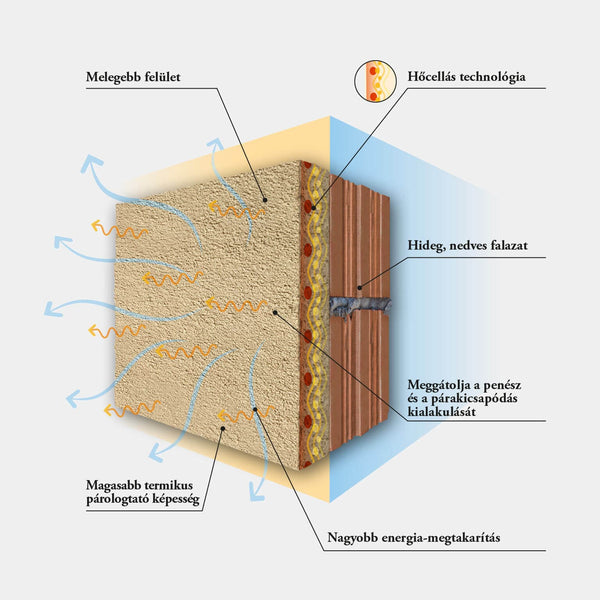
Wall drying. Damp walls, blistering plaster, white efflorescence, mould.

System build-up:
1 Masonry →
2 Bonding bridge (salt barrier) →
3 Renovation plaster →
4 Smoothing coat →
5 Painting.

The complete renovation system build-up is WTA-certified.

Breathable new construction

New masonry where the entire structure needs to breathe (timber structure, natural insulation).

Layer structure:
1 Masonry →
2 Bonding primer →
3 Base coat plaster →
4 Smoothing coat →
5 Painting.

Sophisticated interior, mineral surface

Not painted, but a hand-applied lime surface — marmorino, spatolato.

Layer structure:
1 Masonry →
2 Bonding primer →
3 Base plaster →
4 Smoothing coat →
5 Decorative lime plaster.

1. The wall substrate

Leveling and repairing masonry
A breathable wall starts with the mortar. After the old plaster is removed, the bare masonry is often uneven, incomplete, and has washed-out joints—this must be levelled and repaired before plastering can begin. (In new masonry, the same applies to the role of masonry and bedding mortar.) BioCalce lime mortars are made from pure NHL 3.5 lime: they are compatible with historic masonry, salt-resistant, and soft—the masonry remains “sacrificial” and can be removed without damage.

2. Bonding primer

So the plaster adheres while the salt stays out
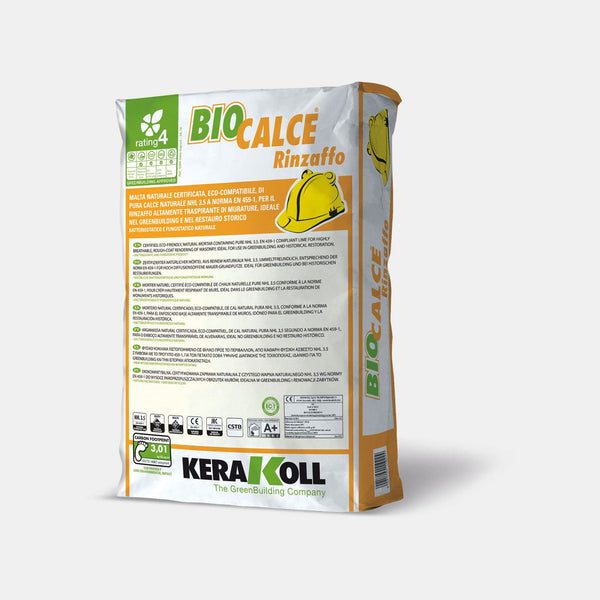
Plaster does not adhere to a smooth wall, but to a rough base coat with balanced absorbency. Biocalce Rinzaffo forms this bonding bridge (spatterdash coat)—with excellent breathability and salt resistance. In the restoration system, it serves a dual purpose: it provides adhesion for the topcoat plaster and acts as a salt barrier, preventing salts from the wall from migrating into the fresh plaster.
3. Base coat plaster

The breathable base coat (the condition of the wall is decisive)
The base coat provides the wall’s main layer and a flat surface. This is where the two approaches diverge: on sound masonry, use a traditional breathable base plaster; on actively damp or salt-contaminated walls, use WTA-certified renovation plaster. Both are made of pure NHL 3.5 lime, and their water-vapour diffusion resistance is a fraction of that of cement (μ ≈ 6 compared with cement’s value of ≈ 20), allowing the wall to dry outwards continuously.
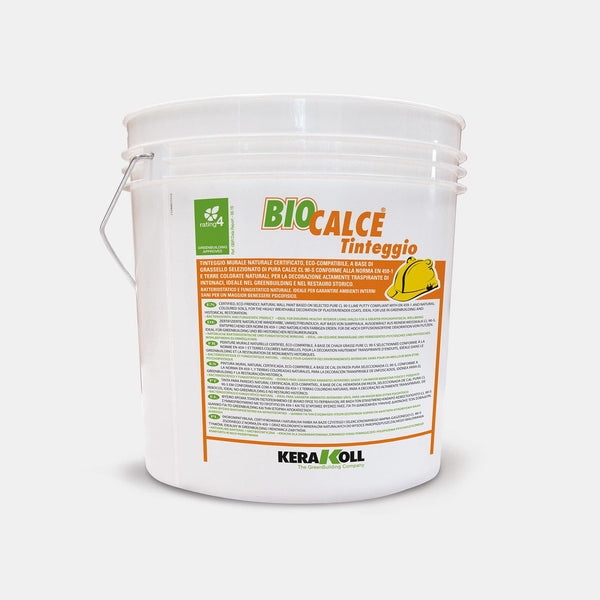
4. Smoothing and skim coating

A paint-ready yet breathable surface
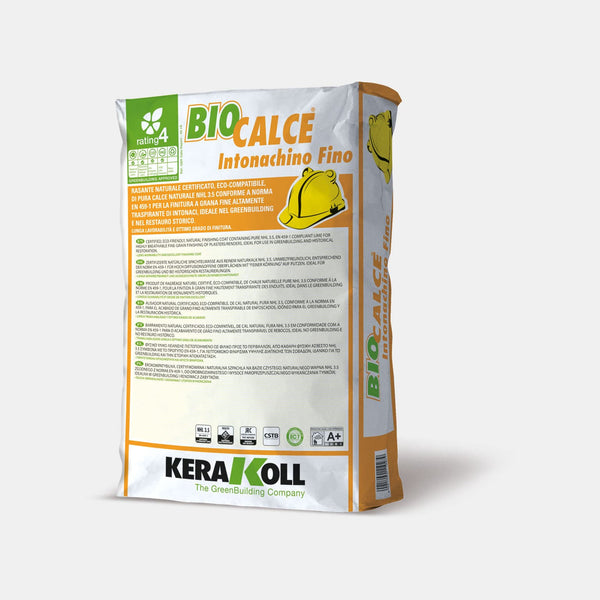
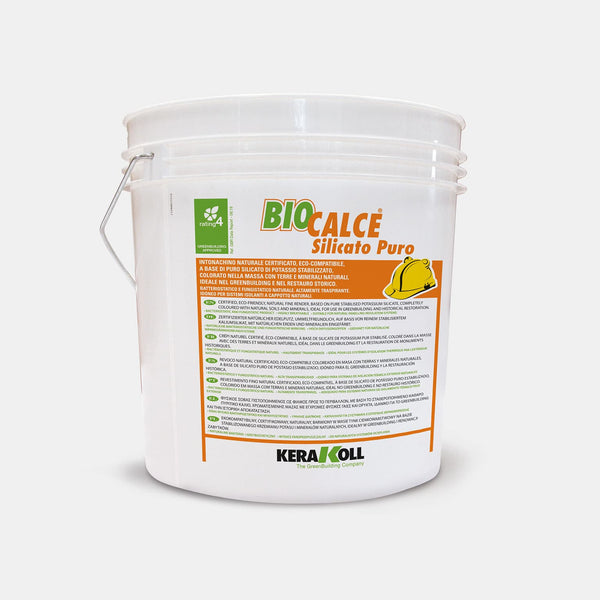
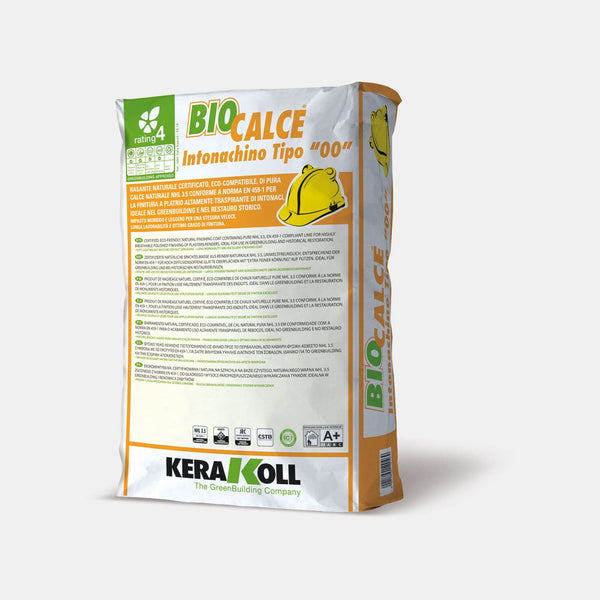
The finishing coat seals the plaster, creating an even, paintable—or decorative in its own right—mineral surface. Gypsum filler or cement-based skim coat may be smooth, but they trap moisture, and on lime plaster they become patchy and peel off. Biocalce Intonachino is made entirely from pure NHL 3.5 lime, so the top layer does not seal the wall either—you simply choose the grain size according to the desired smoothness.

5. Completion

Breathable paint or decorative render
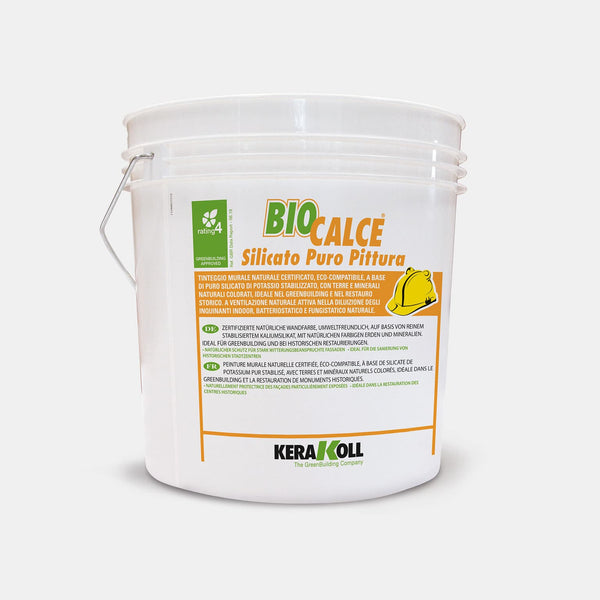
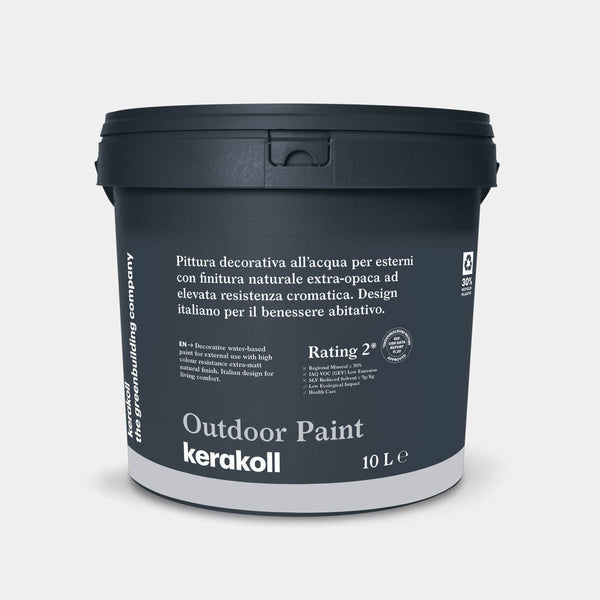
The finishing layer completes the system—and determines whether the wall can truly breathe. Whether it is a thin, vapor-permeable paint or a thicker, textured mineral render, both are mineral-based and vapor-permeable, so they do not seal the wall. Never paint over the system with acrylic or plastic paint.

Not just one layer—the entire system is certified

WTA 2-2-91/D
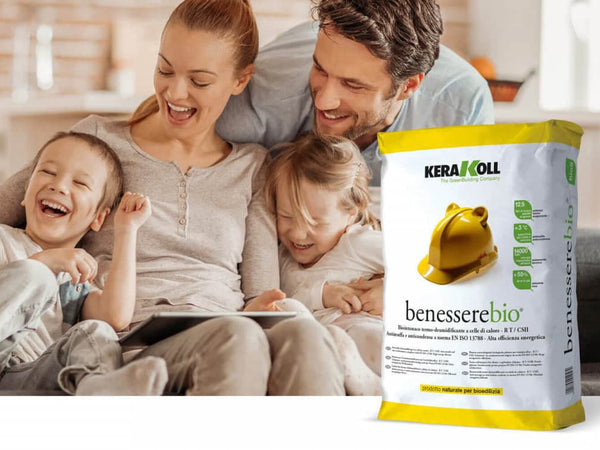
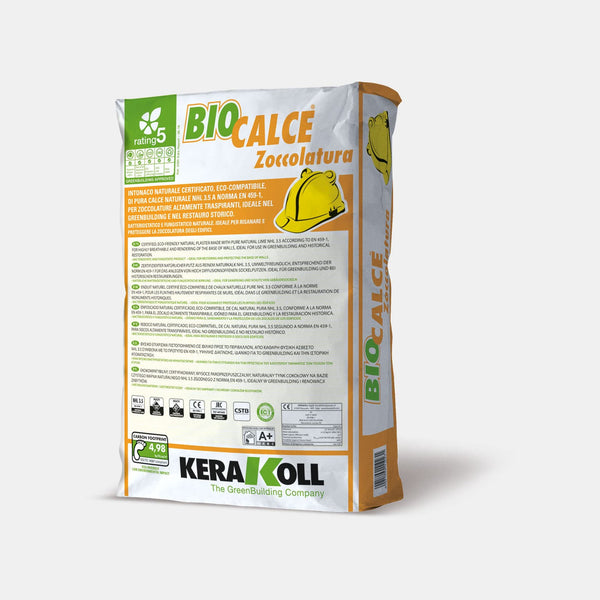
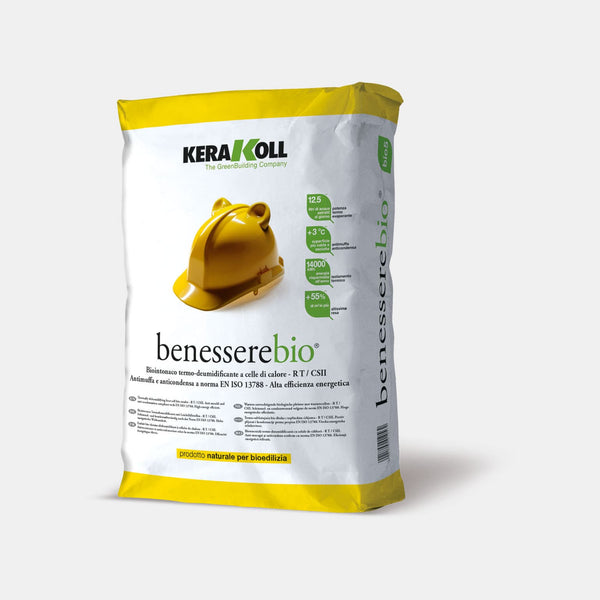
In the restoration of damp, salt-damaged walls and in heritage restoration, WTA certification is the recognized quality benchmark for restoration plasters. On the market, this typically means a single product — one WTA-certified restoration plaster. At Kerakoll, the complete lime-plaster system is certified under WTA 2-2-91/D, layer by layer: Biocalce Rinzaffo (bonding coat and salt barrier), Biocalce Zoccolatura (salt-damage restoration plaster), Biocalce Intonaco and Intonaco Fino (base plasters), GeoCalce Intonaco and GeoCalce Tenace (geoplaster systems), and Benesserebio (thermal-cell restoration bioplaster).
Vapour permeability is a sequential property: the entire wall is determined by its weakest layer. When the bonding coat, restoration plaster, and base plaster are all part of the same WTA system, the layers are proven to work together — the salt remains in the pores, vapour evaporates, and the surface stays dry.
Often a requirement for grant-funded and heritage restoration projects: heritage and historic-building renovations — particularly projects financed through EU or government funding — frequently require the use of WTA-certified materials. The complete BioCalce / GeoCalce system complies with this requirement, making it eligible for funding and acceptable to heritage authorities. The system is finished with breathable lime-, silicate-, or mineral paint, preserving the vapour permeability of the WTA-certified build-up.

Not sure which layer you need for which wall?

The cause of a damp wall and the correct layer sequence can often only be determined accurately on-site—where the water is coming from, how high it rises, and the level of salt contamination. Request a free on-site assessment and a quote for materials and labor: we’ll tell you whether breathable plaster is sufficient or whether a complete wall-drying system is needed, and exactly which BioCalce / GeoCalce products are right for your wall.

hello@masterworks.hu
+36 70 400 2040